 Jazz has become a global language. In Jazz With an Accent ®, we explore the many ways musicians around the world have reimagined their traditions with the tools, strategies, and history of jazz, as well as vice versa.
Tonight, we spotlight piano music, and we’ll start with “Goldwrap” by Swedish pianist Esbjorn Svensson and his trio live in Hamburg. Then, we’ll take a sharp turn from European jazz to Latin American folklore reimagined.
 Eduardo Lagos (1929-2009), was a pianist, composer, and practicing ophthalmologist. One of my musical heroes, Lagos revitalized the folkloric tradition in Argentina by incorporating the tools and strategies of jazz, stretching the forms, using improvisation, and expanding the harmonic vocabulary.
In the 1960s, he was part of a folkloric music boom in Argentina and the leading figure of what became known as proyección folklórica, folkloric projection, a timid label that has always sounded to me like an (unnecessary) apology for not sticking with the old ways.
“We know perfectly well that we are not ‘making folklore,’ because folklore has already been made,” Lagos once said. “At most, we can dig into its essence and roots to project it into today.” That, he did.
We’ll hear “La Oncena” (the Eleventh), Lagos’ take on the chacarera (one of the classic styles in Argentine folk music) and, arguably, his most famous composition. The title alludes to the extended structure of the key chord of the song (which included the 7th, 9th, and 11th notes of the scale) a practice common in jazz but not in this genre.
This piece has many versions, including one by the great singer Mercedes Sosa. Tonight’s performance features Lagos playing with his trio, featuring two historic figures in Argentine jazz, bassist Jorge González, and drummer Pocho Lapouble.
We’ll complete the first half featuring two Spanish musicians who, each in his own way, opened the language of flamenco: pianist, guitarist, and singer Diego Amador and pianist Chano Dominguez.

Diego is the younger brother of Raimundo and Rafael Amador, founders of the influential flamenco blues group Pata Negra. Piano, to point out the obvious, is not a flamenco instrument. That didn’t stop Diego. “With the guitar, I dedicated myself to playing on the records of Paco [De Lucia], Sabicas, Niño Ricardo,” he once said. “For the piano, I wrecked the LPs by Chick Corea and Herbie Hancock until I got their solos. During those days, I never left the house; I only stopped to eat and sleep.”
We’ll hear Diego Amador’s rumba flamenca “Al Latin,” featuring guest guitarists Raimundo Amador and Luis Salinas.
And we’ll close the first half with Chano Dominguez’s reimagining of “Turn Out the Stars,” as “Tu Enciendes Las Estrellas.”
The second half of Jazz With an Accent opens with “Two Ways” by Turkish pianist Fahir Atakoglu from IF, his album featuring Horacio “El negro” Hernández on drums and Anthony Jackson on bass. And then we’ll hear British pianist, horn player, and composer Django Bates’ “We Are Not Lost We Are Simply Finding Our Way,” a title that I might steal as a subtitle for the radio show. Bates (a frequent presence in this program) is an exceptional player who wraps sneakily subversive musical ideas in a sharp sense of humor and a “Why not?” attitude. This track is from Bates’ album The Study of Touch.
And we’ll complete tonight’s program, which started with the idea of a piano walkabout, featuring the work of two drummers, Jordi Rossy and Manu Katché.

You might have heard Rossy playing drums behind Brad Mehldau, Danilo Perez, Guillermo Klein, or Paquito D’Rivera, but around 2000, he shifted his focus to the piano. We’ll hear “Sexy Time” from Rossy’s Wicca, his debut as a leader, leading a peculiar organ trio featuring fellow countryman, pianist Albert Sanz on Hammond B3 and RJ Miller on drums.
And we’ll close with “Song for Her” by French drummer Manu Katché, from his album Playground. Katché is perhaps best known for his work with Sting and Peter Gabriel. Mirroring Rossy’s story, he started in music as a pianist before focusing on percussion and drumming. For this album, he called on ECM’s labelmate Polish pianist and composer Marcin Wasilewski.
There’s a world of jazz to discover, but there is not enough time in the program to talk and play the music I’d like to share with you — and I prefer you hear the music. If you want more information about the music and the artists you heard or missed in the program, please check this blog, Jazz With an Accent.com or WDNA.org.
And if you’d like to reach me, please write to me at fernando@jazzwithanaccent.com
For now, join us Thursday at 7 p.m. EST at
Thank you for listening.
Playlist
- EST Esbjorn Svensson Trio Goldwrap (Live in Hamburg)
- Eduardo Lagos Trio La Oncena
- Diego Amador Al Latin
- Chano Dominguez Tu Enciendes Las estrellas
- Fahir Atakoglu Two Ways
- Django Bates We Are Not Lost We Are Simply Finding Our Way
- Jordi Rossy Trio Sexy Time
- Manu Katche Song for Her

 This first edition of Earthworks features pianist and brass player Django Bates and saxophonist Iain Ballamy, both intrepid composers and bandleaders in their own right (more about them later).
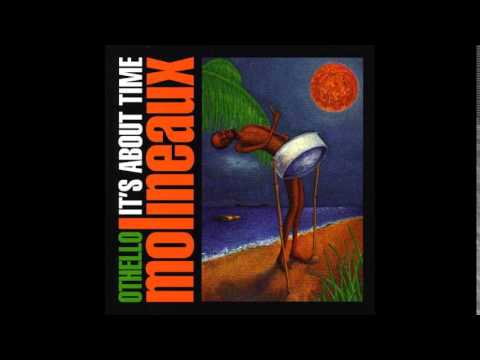 And we’ll close the first half of tonight’s show with a blend of British, African, and Caribbean accents. We’ll hear “Bliss-Off,” by saxophonist Iain Ballamy from his album Acme; and then, call it a slight left turn, “No Way Out” from the brilliant Trinidadian steel pan master Othello Molineaux’s debut album It’s About Time. Molineaux began his career as a pianist but, according to his biography on seetobago.com, by age 15 he learned to tune pans, the national musical instrument of Trinidad and Tobago, and led his own steel band
 Jazz With an Accent