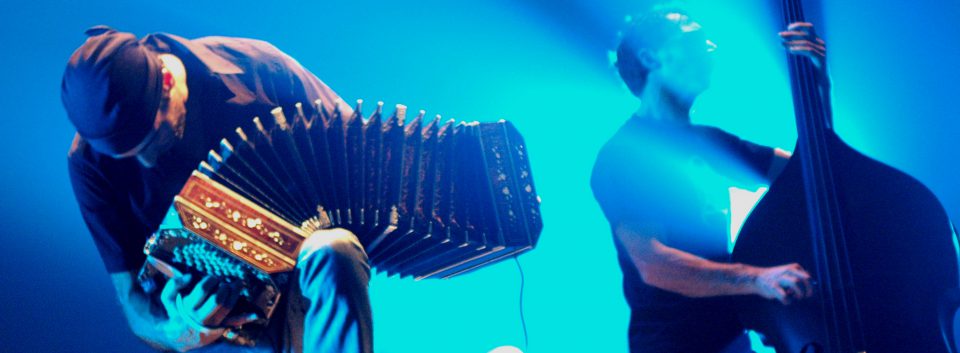
 Jazz has become a global language. Jazz With an Accent ®, the radio program and the blog, explores the many ways musicians around the world have reimagined their traditions with the tools, strategies, and history of jazz — and vice versa.
This Thursday, we will listen to jazz with an African accent.
We’ll open with guitarist Lionel Loueke, from Benin. We’ll hear “Rossignol,” a track featuring singer Gretchen Parlato, from his album Virgin Forest. And we’ll follow that with “Bona Petit” by Cameroonian multi-instrumentalist and singer Richard Bona.
What we’ll hear tonight is an organic mix of a world of influences. At some point, to pick at the sources is to miss the whole. The lives of the artists we’ll hear tonight have been defined by their search for a vocabulary to tell their whole story. Loueke moved to Ivory Coast to study at the National Institute of Art, and from there to the American School of Music in Paris, Berklee College of Music in Boston, and the Herbie Hancock Institute of Jazz (formerly the Thelonious Monk Institute of Jazz) in Los Angeles. Bona moved to Germany to study music and then to Paris, where he played with African stars such as Manu Dibango and Salif Keita. In 1995, he settled in New York (he has lived, at least part-time, in Miami Beach. Welcome to the neighborhood, Mr. Bona) and connected with artists such as Joe Zawinul, Pat Metheny, and Harry Belafonte.
South African trumpeter and flugelhorn player Hugh Masekela was an African jazz pioneer who had an unexpected, path-breaking hit in 1968 with “Grazing in the Grass.”
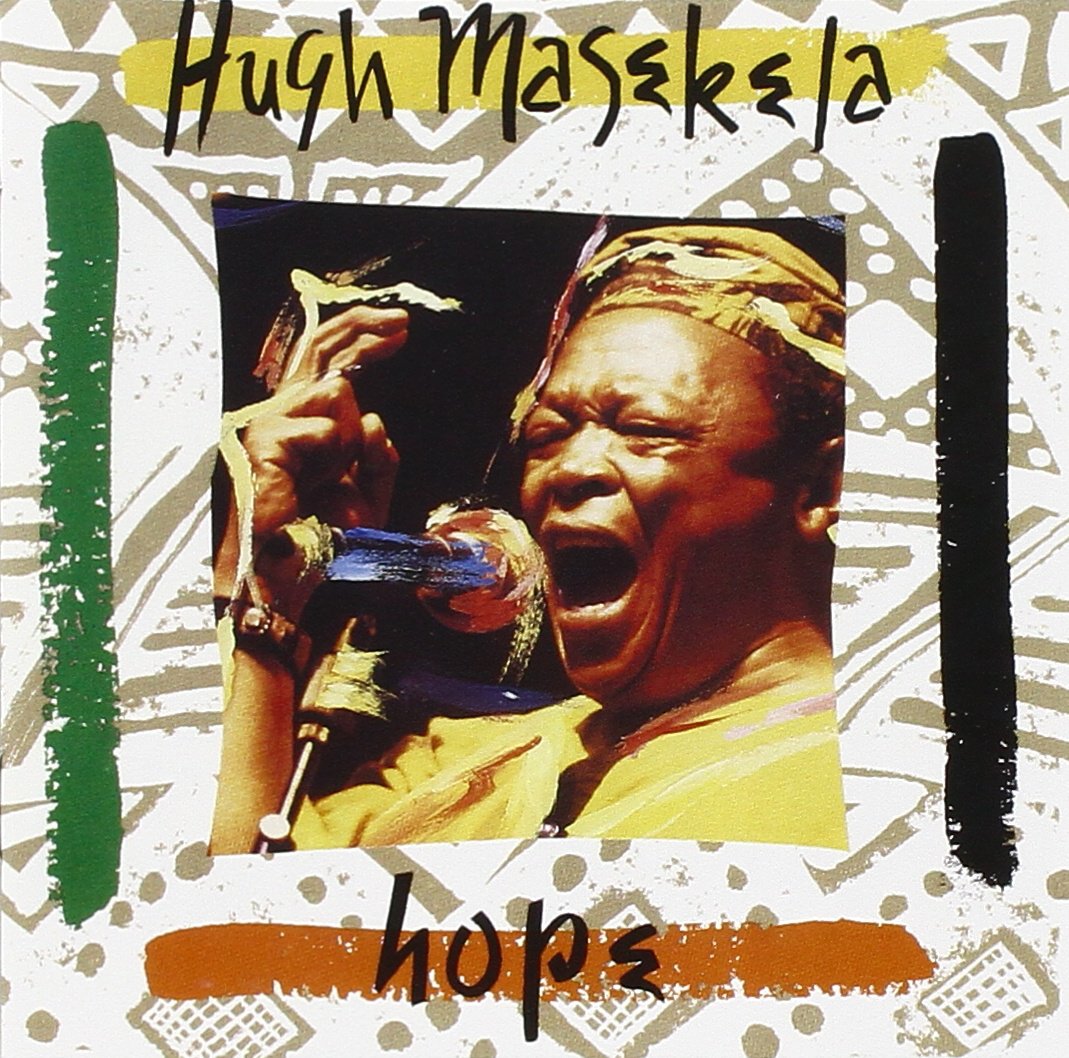 As one account goes, the song is a reworking of a novelty piece entitled “Mr. Bull No. 4.” (the title and the cowbell in the original version certainly nod in that direction) and it was added at the last minute to round up Masekela´s album, The Promise Of A Future. Tonight we’ll hear an updated live version of “Grazing in the Grass” by Masekela and his septet at D.C.’s Blues Alley in 1994.
Cameroonian guitarist and composer Vincent Nguini offers a very different idea of global fusion in his urgent “Mavro,” from his album Symphony Bantu. Nguini was perhaps best known for his work with Paul Simon. He was reportedly a fan of Duke Ellington and Coltrane, but also Jimi Hendrix, Albert King, and Stevie Wonder. And as Jon Pareles wrote in his obituary of Nguini for The New York Times in 2017, Nguini “was fluent in jazz, blues, salsa, samba, bikutsi, and makossa from Cameroon, highlife from Ghana, juju from Nigeria, soukous from Congo and mbaqanga from South Africa, as well as Mr. Simon’s folk-pop.” Borders? What borders?
The second half of Jazz With an Accent opens with Senegalese electric bassist, singer, and composer Alune Wade, followed by Tunisian oud master and composer Anouar Brahem.
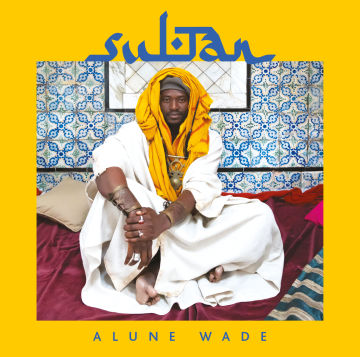 Wade’s approach has been to consistently, and purposefully, ignore musical borders. He came into focus for me with his 2015 album Havana-Paris-Dakar, a collaboration with Cuban pianist Harold López-Nussa smartly constructed on a blend and collusion of cultural histories and sensibilities rather than a calculus of specific musical elements.
Tonight’s “Djolof Blues,” is from Wade’s brilliant album Sultan, which was recorded in Paris, Brooklyn, Dakar, and Tunis.
And then we’ll hear “Unexpected Outcome” from Anouar Brahem’s 2017 album Blue Maqams, featuring Dave Holland on bass, Jack DeJohnette on drums, and Django Bates on piano.
The “maqams” of the title refer to the modal system in Arab music.
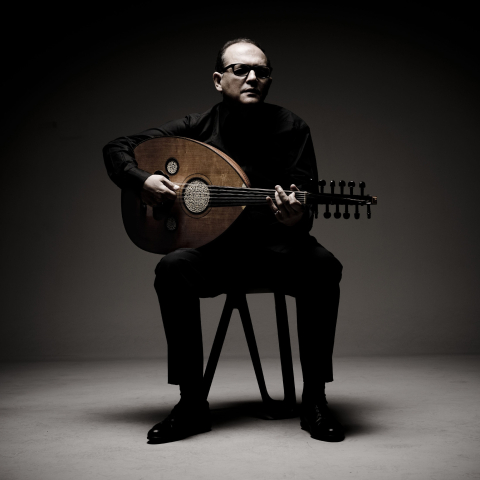 While he started playing with improvisers in the 1980s, Brahem never intended to become a jazz musician. In the notes for Blue Maqams, he recalled that he started listening to jazz when he was a teenager living in Tunis in the 70s. “At the time, I was passionately devoted to traditional Arab music and had the good fortune to study under the great master Ali Sriti. Paradoxically, I was [also] full of curiosity about other forms of musical expression. The aesthetics of jazz were very different from those of Arab music, but I was attracted by this music, which took me into a completely different world, one I felt close to as well. Undoubtedly, there is a kind of spontaneity in Arab music, a way of playing that allows musicians to go deep into their feelings and take some liberties with the original score through improvisation, and perhaps this somehow echoes what happens in jazz.”
(Photo of Anouar Brahem by Marco Borggreve.)
And we’ll close tonight with “The Mountain of Night” by South African pianist and composer Abdullah Ibrahim. Another historical figure in African jazz, Ibrahim, at the time known as Dollar Brand, was a bandmate of Masekela in the fabled Jazz Epistles. (Worth noting that the band’s Jazz Epistle Verse One, recorded in 1960, stands as the first full-length jazz LP by Black South African musicians.) This version of “The Mountain of Night” is from Ibrahim’s African Suite for Trio and String Orchestra, comprising compositions by Ibrahim spanning decades of his career. It features his working trio (Belden Bullock, bass, and George Gray, drums), a string section from the Youth Orchestra of the European Community, and arrangements by Swiss American reedman and composer Daniel Schnyder.
There is not enough time to discuss music and artists and play the music I’d like to share with you — and I prefer you hear the music. So, if you want more information about who and what you heard (or you might have missed), please come back and check here or at WDNA.org
Join us Thursday at 7 p.m. EST at
There is a world of jazz to discover.
If you’d like to reach me, please write to me at fernando@jazzwithanaccent.com
Playlist
- Lionel Loueke Rossignol (Featuring Gretchen Parlato)
- Richard Bona Bona Petit
- Hugh Masekela Grazing in the Grass
- Vincent Nguini Mavro
- Alune Wade Djolof Blues
- Anouar Brahem Unexpected Outcome
- Abdullah Ibrahim The Mountain Of The Night

 Jazz With an Accent