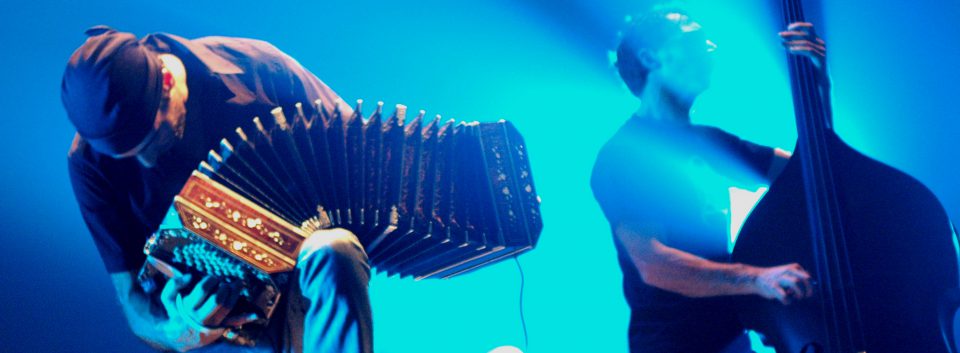

Tonight we´ll listen to large ensembles with an accent. It’s a narrow sampler but of excellent writing that mixes instruments and strategies of jazz with elements from the tango, flamenco, and African traditions, with touches of pop, rock, avant-garde, and European classical music.
The opening track tonight is “Buenos Aires Report” by Argentine pianist Pablo Ziegler from his album Amsterdam meets New Tango. Ziegler was, for 10 years, the pianist of Astor Piazzolla’s New Tango Quintet. He’s a classically trained musician with a love of jazz.
The first time I heard him in concert in Buenos Aires, he had a trio a la Jacques Loussier and his repertoire included classical pieces interpreted in the jazz idiom.

(Photo of Pablo Ziegler by Masae Shiwa . Courtesy of the artist.)
Piazzolla had once tried his hand at jazz tango fusion, most notably on his album Take Me Dancing, recorded in New York in 1959. At the time, Piazzolla thought it was a musical and (a potential) commercial success, but the results well, let’s call them a noble failure. He later dismissed the album as “an abomination.” So when Piazzolla called, Ziegler was surprised. “I couldn’t figure out why he wanted me,” he told me. “But what was clear was that he didn’t want a tango pianist.”
In time, Ziegler’s contribution became essential to the performance of Piazzolla’s music. But after Piazzolla dissolved the group in 1988 and Piazzolla’s passing in 1992, Ziegler didn’t settle on a keeper-of-the-flame role and instead embarked on creating his own blend of jazz and tango. Amsterdam Meets New Tango was nominated for a Latin Grammy in 2013. Ziegler won his first Grammy for Jazz Tango in 2018.
We´ll complete this first half with two other large European ensembles with different accents.
“To Mr. Dolphy,” by Danish guitarist Pierre Dorge and his New Jungle Orchestra, from their album Brikama, is a sample of Dorge’s adventurous approach and the resulting idiosyncratic mix. Here’s an avant-gardist with a love for Duke Ellington, classic American big band sound, and African music creating a mix stirred with a healthy spoonful of humor. We’ll follow that with “Footloose and Fancy-Free” by drummer Bill Bruford and saxophonist Tim Garland and the Earthworks Underground Orchestra recorded live at N.Y.C.’s Iridium Jazz Club in 2004. The group suggests an expanded version of Bruford’s jazz-rock fusion group Earthworks reimagining the band’s repertoire for a large ensemble which, in fact, is Garland’s nine-piece Underground Orchestra.
A happy confluence of strong content finding a ready-made vehicle.
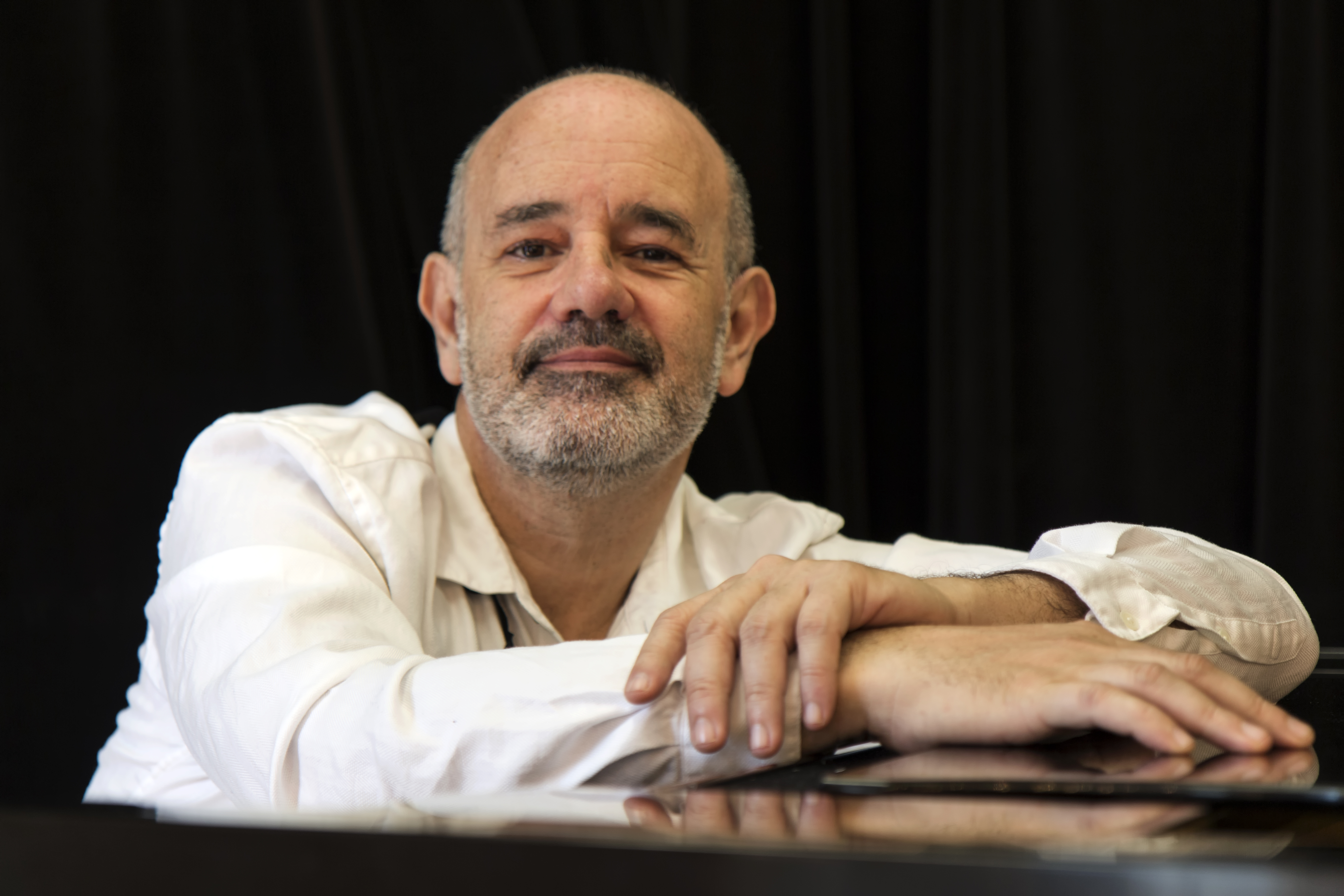 The second half opens with Brooklyn-based Argentine pianist, composer, and arranger Emilio Solla and his nine-piece orchestra La Inestable de Brooklyn, the Unstable of Brooklyn, a twist on an old label used in Argentina for house ensembles in, for example, radio stations and certain concert halls — “La orquesta estable de so-and-so.” If you know anything about the economics of jazz, the name The Unstable of Brooklyn needs no further explanation. We’ll hear “Llegara, Llegara, Llegara” (It will arrive, it will arrive, it will arrive) from the band’s debut recording Second Half. There’s exceptional writing and playing here and to call attention to the influences and references is to miss the whole. (Photo of Emilio Solla courtesy of the artist)
After hearing samples of up-to-date jazz tango in the work of Ziegler and Solla, we’ll circle back to Gato Barbieri, who five decades earlier opened the door for many of us watching and listening from far away, by putting on the table what, in retrospect, sounds like an obvious idea: If American jazz musicians could use music from the Great American Songbook as source material, why couldn’t we, in Latin America, use songs from the great Latin American Songbook for our jazz?
We’ll hear “Milonga Triste,” a classic milonga (an African-rooted, foundational pre-tango style which, to a degree, is to tango what blues is to jazz) reimagined by Cuban arranger and composer Chico O’Farrill for Barbieri’s Chapter Three: Viva Emiliano Zapata.
Tonight’s program will close with music by Spanish saxophonist Perico Sambeat and Danish trumpet player, composer, and arranger Palle Mikkelborg. Big bands are the symphony orchestras of jazz and offer composers and arrangers muscle and a broad palette of sounds.
“Nido del Aire” (Nest of Air) is noted in the recording as a “nana,” a lullaby, and Sambeat has his robust Flamenco Big Band whispering. Meanwhile, Mikkelborg, probably best known in the States for Aura, his recording with Miles Davis and expanded big band, will close with a lush orchestral version of Billy Strayhorn’s “Lotus Blossom.”
In Jazz With an Accent, we say there’s a world of jazz to discover — but there is not enough time to talk and play the music I’d like to share with you, and I prefer you hear the music, not me. The idea behind these posts is to provide more information about the music and the artists you heard in the program.
If you’d like more information, make a comment, place a request, or ask a question, please write to me at fernando@jazzwithanaccent.com
To hear what you just read, check Jazz with an Accent on WDNA.org tonight at 7p.m.
Thank you for listening.
Playlist
- Pablo Ziegler & Metropole Orchestra “Blues Porteño” Amsterdam Meets New Tango
- Pierre Dørge & New Jungle Orchestra “To Mr.Dolphy” Brikama
- Bill Bruford & Tim Garland “Footloose and Fancy-Free” Earthworks Underground Orchestra
- Emilio Solla Y La Inestable De Brooklyn “Llegara, Llegara, Llegara” Second Half
- Gato Barbieri “Milonga Triste” Chapter Three Viva Emiliano Zapata
- Perico Sambeat “Nido del Aire” (Nana) Flamenco Big Band
- Palle Mikkelborg “Lotus Blossom” Song … Tread Lightly
 Jazz With an Accent