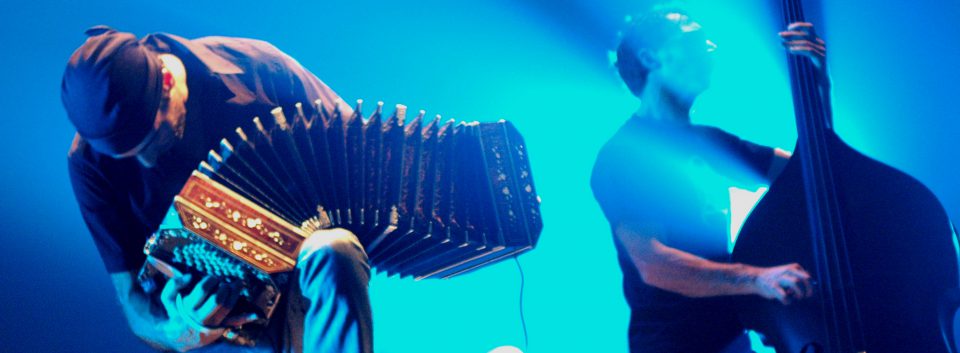

Jazz has become a global language. In Jazz With an Accent ®, we explore the many ways musicians around the world have reimagined their traditions with the tools, instruments, and strategies of jazz — and vice versa. Tonight, we’ll explore standards, jazz standards with an accent but also standards of other musical traditions given a jazz treatment.
Standards offer a ready-made common language between artists and audiences and, with that, perhaps a better understanding (and a greater enjoyment) by the listeners of what a performer is trying to do.
We’ll open the program with Panamanian pianist Danilo Perez and a rumba version of John Coltrane´s “Impressions,” from his album Central Avenue.
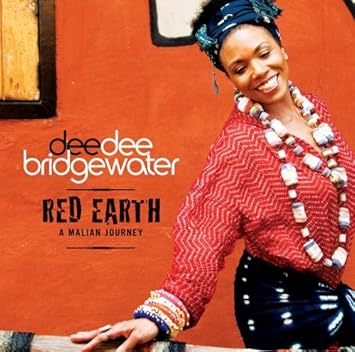
And we’ll follow it with singer Dee Dee Bridgewater’s take on “Compared to What,” from her album Red Earth recorded in Mali. “With age comes wisdom, spiritual awakenings,” wrote Bridgewater in her notes for the album. “This project is my ode to Mali and to Africa.”
For this album, she enlisted Malian musician and producer Cheik Tidiane Seck (we heard him in previous weeks in his collaboration with Hank Jones), a group of superb Malian musicians and vocalists, and Bridgewater’s pianist Edsel Gomez.
“Compared to What” was written by Gene McDaniels and recorded by Les McCann in 1966. But the song actually exploded when McCann and saxophonist Eddie Harris performed it at the Montreux Jazz Festival in Switzerland in 1969. In preparing the set, and reading the lyrics, I was reminded that this was originally a protest song addressing the social and political climate of the time, including the Vietnam War, racial inequality, and the struggle for justice. The more things change …
Then we’ll take a slight turn here and add a Spanish accent to the conversation.
We’ll hear pianist Chano Dominguez and bassist Javier Colina interpret the standard “You Must Believe In Spring,” and then we’ll have Cuban pianist Chucho Valdés playing an expansive reimagining of Moisés Simon’s classic “El Manisero,” in a solo version from his album Solo in New York.
We’ll close the first half of tonight´s show with Italian trumpeter Paolo Fresu, someone we have heard in Jazz With an Accent playing his brand of avant-jazz, but here we´ll hear him with his acoustic quintet revisiting “Blame it on My Youth.”

The second half opens with another piano-and-bass duo, Norwegian bassist Terje Gewelt and French pianist Christian Jacob reimagining a different kind of standard. The hymn-like “The Water Is Wide” has a long, winding, tangled history. Some sources identify it as a Scottish song dating to the 1700s, others have said it is based on a Scottish ballad called “Waly, Waly,” or pieced together from various sources. Along the way, British composer Benjamin Britten published a famous version in 1947, and then Pete Seeger popularized it when he included it on his album American Favorite Ballads, Vol. 2. in 1958. The song has also been interpreted by artists as disparate as Bob Dylan and Joan Baez, Barbra Streisand, PJ Harvey, and James Taylor.
Gewelt and Jacob recorded this version live on a concert tour of the duo in Norway, and it appears on Gewelt’s album Hope. Their performance has a lyrical quality that draws from jazz and classical music and yet preserves a certain unpretentious, open folk spirit.

And speaking of folk music, we’ll follow that with Norwegian pianist Bobo Stenson and his trio playing “Alfonsina,” his version of “Alfonsina y el Mar,” a tribute to poet Alfonsina Storni originally written as a zamba, an Argentine folk music style, by composer Ariel Ramirez, with lyrics by writer Félix Luna. The song was part of an album titled Mujeres Argentinas (Argentine Women) and became an instant classic sung by the great Mercedes Sosa.
The final stretch of tonight’s program is an unplanned celebration of large ensembles.
In his album Coral, Puerto Rican saxophonist David Sánchez reimagines a Caribbean “Matita Pere ” by Antonio Carlos Jobim, and then we’ll have a tribute to the legacy of Duke Ellington and Billy Strayhorn.
We’ll close with two of Strayhorn’s classics: “Take the “A” Train,” a signature piece of the Duke Ellington Orchestra, reimagined by the Vienna Art Orchestra on its album Swing & Affairs, and then “Lotus Blossom,” in a lush version by Danish trumpet player, composer, and arranger Palle Mikkelborg. He is probably best known to American audiences for Miles Davis’ 1989 album Aura, which Mikkelborg wrote, arranged, and produced. It was Miles Davis’s final album.
If you would like more information about what you heard (or what you missed), check this blog or just write to me at fernando@jazzwithanaccent.com
For now, and as always, thank you for listening.
PLAYLIST
- Danilo Perez “Impressions” Central Avenue
- Dee Dee Bridgewater “Compared to What” Red Earth A Malian Journey
- Chano Dominguez & Javier Colina “You Must Believe In Spring” Chano & Colina
- Chucho Valdés “El Manisero” Solo in New York
- Paolo Fresu Devil Quartet “Blame It On My Youth” Desertico
- Terje Gewelt bass – Christian Jacob piano “The Water is Wide” Hope
- Bobo Stenson Trio “Alfonsina” Goodbye
- David Sánchez “Matita Peré” Coral
- Vienna Art Orchestra “Take the A Train” Swing & Affairs
- Palle Mikkelborg “Lotus Blossom” To Whom It May Concern

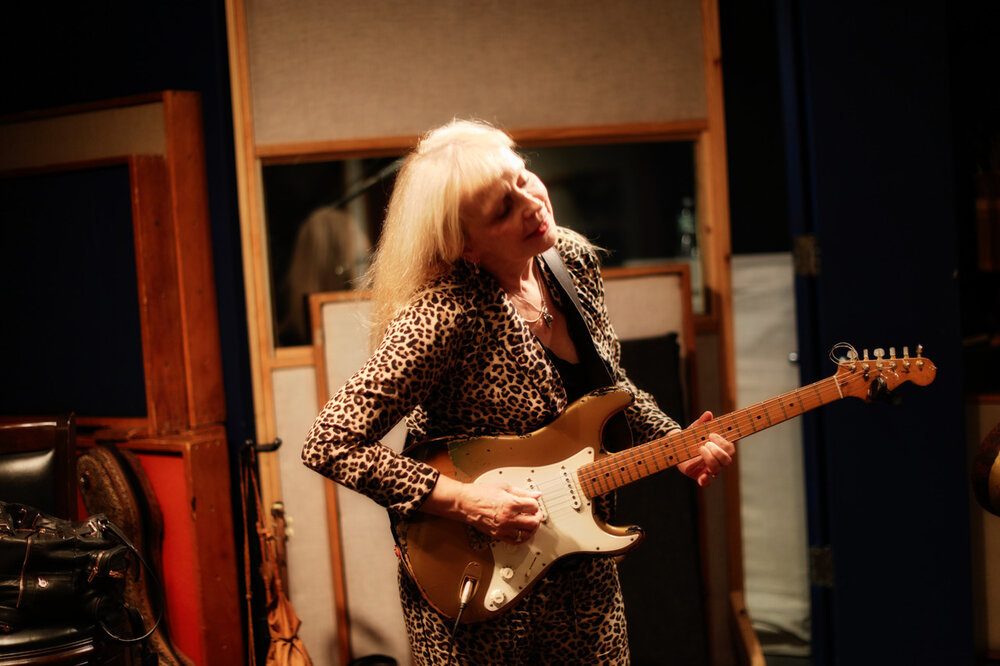 We’ll open with German guitarist Leni Stern and “Ousmane,” a track from her album Africa. This was no hit-and-run cultural sightseeing by Stern. She began by living and working several months a year in Mali and Senegal, resulting in the EP Alu Maye (Have You Heard) recorded in Mali at Salif Keita’s Bamako Studios. The follow-up, Africa, was two years in the making and involved a large cast of African instrumentalists and singers as well as contributions by saxophonist Michael Brecker (in one of his final recordings) and guitarist Mike Stern, Leni’s husband. (Photo of Leni Stern by Sandrine Lee)
 Jazz With an Accent