
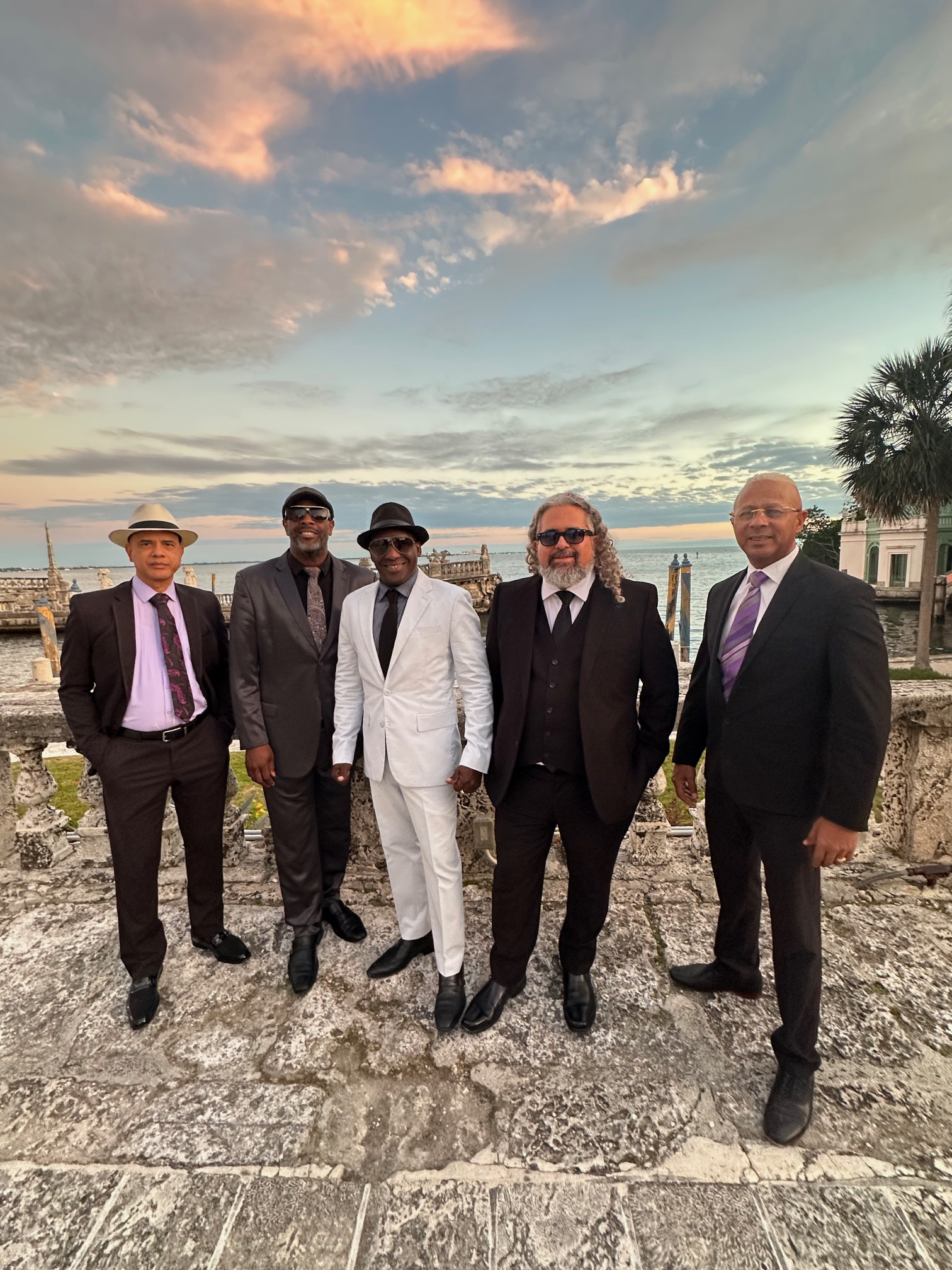
Cortadito, from left to right: Santiago McCook, Tony Perigo, Julio César Rodríguez Delet, José Elías, and Alberto Pantaleón. Photo courtesy of the band.
Since its founding 13 years ago (a lifetime in popular music), Cortadito, Miami’s leading Cuban son group, has survived everything from losing members and the ups and downs of the music business to a pandemic. Talent and persistence will be rewarded on Sunday, May 4, at the Miami Beach Bandshell, when Cortadito celebrates the release of “The Guajiro Triangle” (El Triángulo Guajiro), their first full-length album.
Under the banner “Son Del Mundo,” the concert will feature the Cortadito quintet augmented by additional musicians and guest appearances by Cuban singer Albita, Cuban pianist Michelle Fragoso, Puerto Rican flutist Nestor Torres, Cuban master percussionist Lázaro Galarraga (founding member of Cuba’s Conjunto Folklorico Nacional), Afro-Colombian music ensemble Grupo Barrio Abajo, and popular Brazilian community percussion group Miami Bloco.
The choice of these artists and groups not only focuses on the Cuban roots of the son, a genre born in the late 19th century in eastern Cuba, fusing African and Spanish musical elements, but also its profound influence on world culture.
“Son has been relevant for almost 200 years,” says José Elías, tres player, leader and co-founder of Cortadito. “In Cuban music, the son gave rise to genres such as chachachá, mambo, and timba. But it also had a global impact with salsa, a kind of gumbo of different cultures created by Puerto Ricans, Panamanians, Dominicans, and Cubans who met in New York. But son also reached places like Colombia and Africa. Throughout Africa, it became a fundamental influence in Congolese Rumba, in the so-called golden age of African music [in the 1960s and 1970s], and the work of artists like Tabu Ley Rochereau, Franco and Dr. Nico, but also in Mali and Senegal and groups like Bembeya Jazz, from Guinea, or the Orchestra Baobab from Senegal”.
Cortadito has collaborated with many different artists for years, says Elías, including artists like Eliades Ochoa (of Buena Vista Social Club fame), who, in his own music, pursued the connections between Cuban and African music in collaborations with Cameroonian saxophonist Manu Dibango (CubAfrica,1998) and Malian musicians (AfroCubism, 2010). Moreover, Elías notes that since 2019 and thanks to the efforts of the late Cuban pianist, composer, arranger, and bandleader Adalberto Alvarez, May 8, the birth date of composer Miguel Matamoros and singer Miguelito Cuní, has been celebrated as Cuban Son Day. “So I decided that this celebration of the release of “The Guajiro Triangle” could be an international celebration of Son Day,” says Elías.
Born in the Dominican Republic to Cuban parents, Elías says he grew up “from a very young age” in Miami. Although immersed in Cuban culture, “when I started playing music, I started playing for Eddie Van Halen, heavy metal, and things like that. It was later that I discovered jazz and so-called World Music – African music and Afropop – and it was World Music that eventually led me to Cuban music.”
Elías says, “I already knew Miguel Matamoros, Félix Chappottín, and Arsenio Rodríguez,” but listening to Buena Vista Social Club, an album recorded in Havana in 1997 by Ry Cooder and Nick Gold that revisited classic Cuban music genres with the critical participation of veteran Cuban creators, some of them already retired and almost forgotten, was decisive in his musical evolution. “The authenticity of the sound and the production quality of the Buena Vista Cultural Club was inspiring.” In 1998, Elías began to explore the tres. Since then, the instrument has become central to his music.

José Elías, Cortadito’s co-founder and tres player. Photo by Edwin Cardona, courtesy of Cortadito.
In 2011, after spending 12 years with the group Conjunto Progreso, Elías founded Cortadito with Julio Cesar Rodríguez Delet, a guitarist and singer from Santiago de Cuba. The group started as a duo and released two EPs. Abriendo Caminos in 2012 and Canciones de Julio in 2018, featuring four and five songs, respectively. In search of opportunities, Rodriguez Delet moved to Houston in 2013 and was replaced by singer Humberto Upierre. The group was filled out by a rotating cast of musicians. Rodriguez Delet returned to Miami and rejoined the group in 2018. “Then we fast-forwarded to March 2020, and when we were lifting, COVID came,” says Elias.
“El Triángulo Guajiro” is the first full CD of the group, which was recorded as a septet augmented with guests.
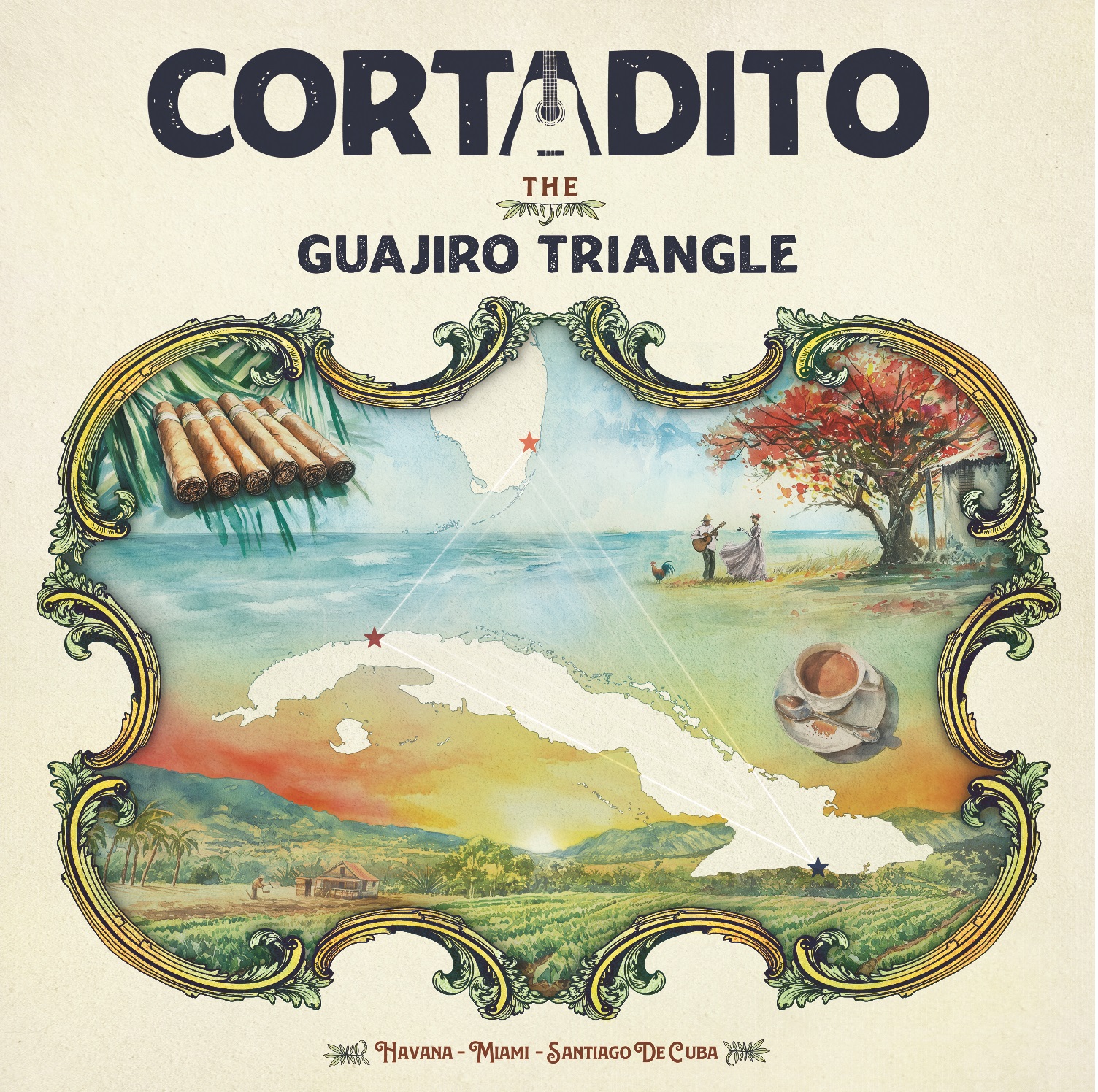
The album plays like a sampler of classic and modern son, says Elías. “Julio is from Santiago, Humberto is from Havana, and we all live in Miami. Julio writes in a very traditional style, the son de Santiago style, which is stripped-down, minimalist, but very Creole. Humberto is more of a Havana son, a more refined style. He uses more jazz voicings in his chords, which gives it a more modern sound – but it’s still son.”
The third composer featured on the album is Alberto Pantaleón Hernández, the late father of the group’s bassist Alberto Pantaleón. His two tracks represent the Havana sound, says Elías. “It’s the sound of a bigger band with various brass and piano, and there you have ‘El Triángulo Guajiro’: Santiago – Havana – Miami, and we meet and live in Miami, the new center of son in the 21st century.”
This story was first posted (in Spanish) by the digital magazine Artburstmiami.com on April 23
 Jazz With an Accent