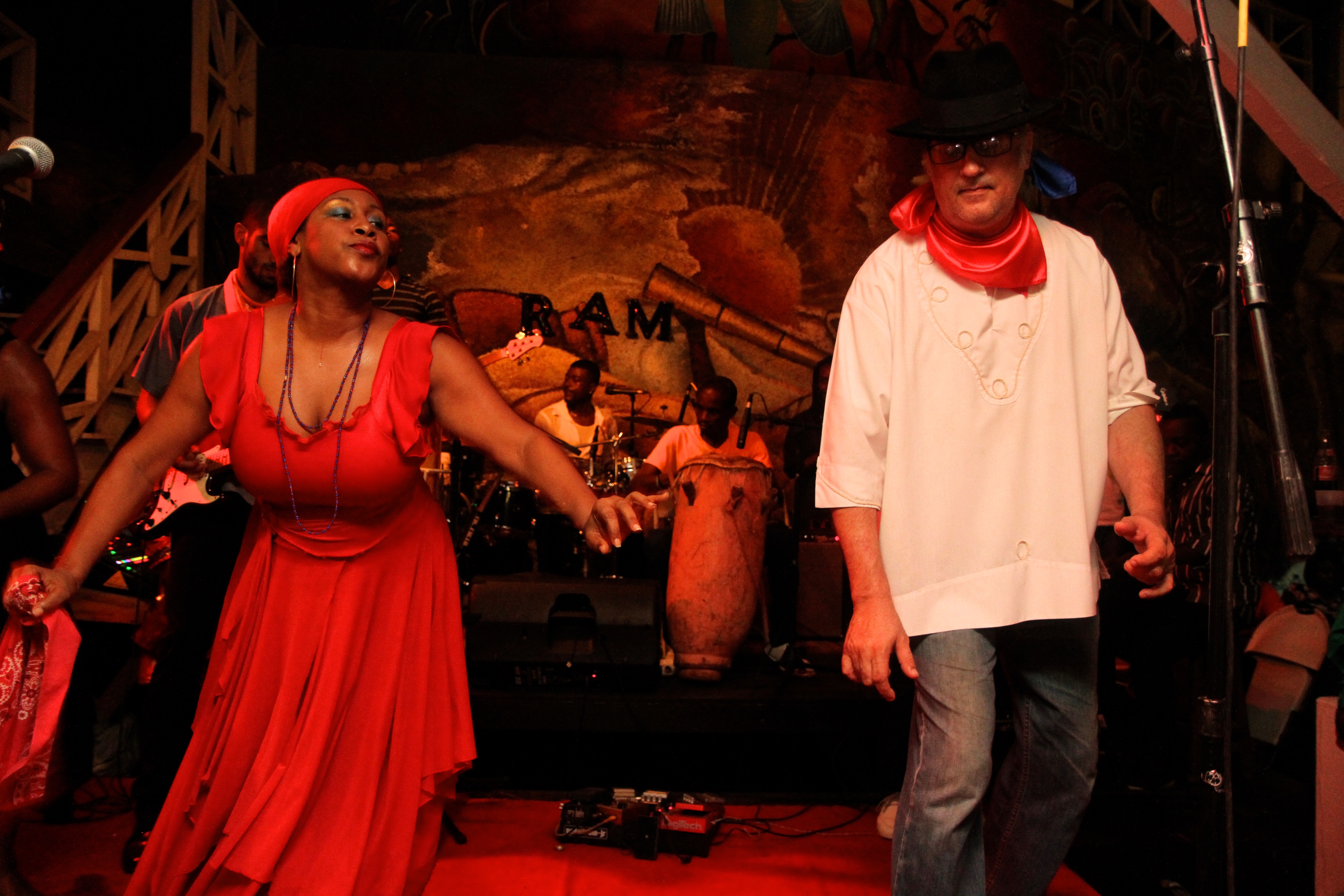
Lunise and Richard Morse performing with RAM. Photo credit Nadia Todres courtesy The Rhythm Foundation
By Fernando González
More often than not, pop music in the Western world is just another product vying for attention and shelf space. It might come in different models and packaging — snarky alt-rock; bluntly sexual reggaeton; street-tough rap — but it’s rarely more subversive than a soap commercial.
But in developing countries struggling with poverty, corruption, and failing institutions, pop music is not only entertainment but also often serves as a vehicle for protest and a tool for change.
In Haiti in the 1990s, the mizik rasin (roots music) movement, blending folk and religious traditions with elements of rock and funk, emerged as a powerful expression of popular resistance. The lyrics of the songs, often using oblique references and parables, a common device in the Vodou tradition, became a popular shorthand to comment, protest, and organize. Dictators banned some of these songs — and made them even more relevant. But that was only part of the story. The very esthetics of rasin, built on rhythms of Vodou rites or utilizing the vaksen, the metal horns of the rara carnival tradition, were a statement about the richness and value of Haitian popular culture.
The 13-piece strong RAM, one of the essential groups of the rasin movement, performs at the North Beach Bandshell, in Miami Beach, Saturday at 8 p.m. presented by Rhythm Foundation. The concert stands as a Fete Gede (or guede), known as the Festival of the Ancestors is the Vodou equivalent of Mardi Gras, the Mexican Day of the Dead, and Halloween, all in one.
 Jazz With an Accent