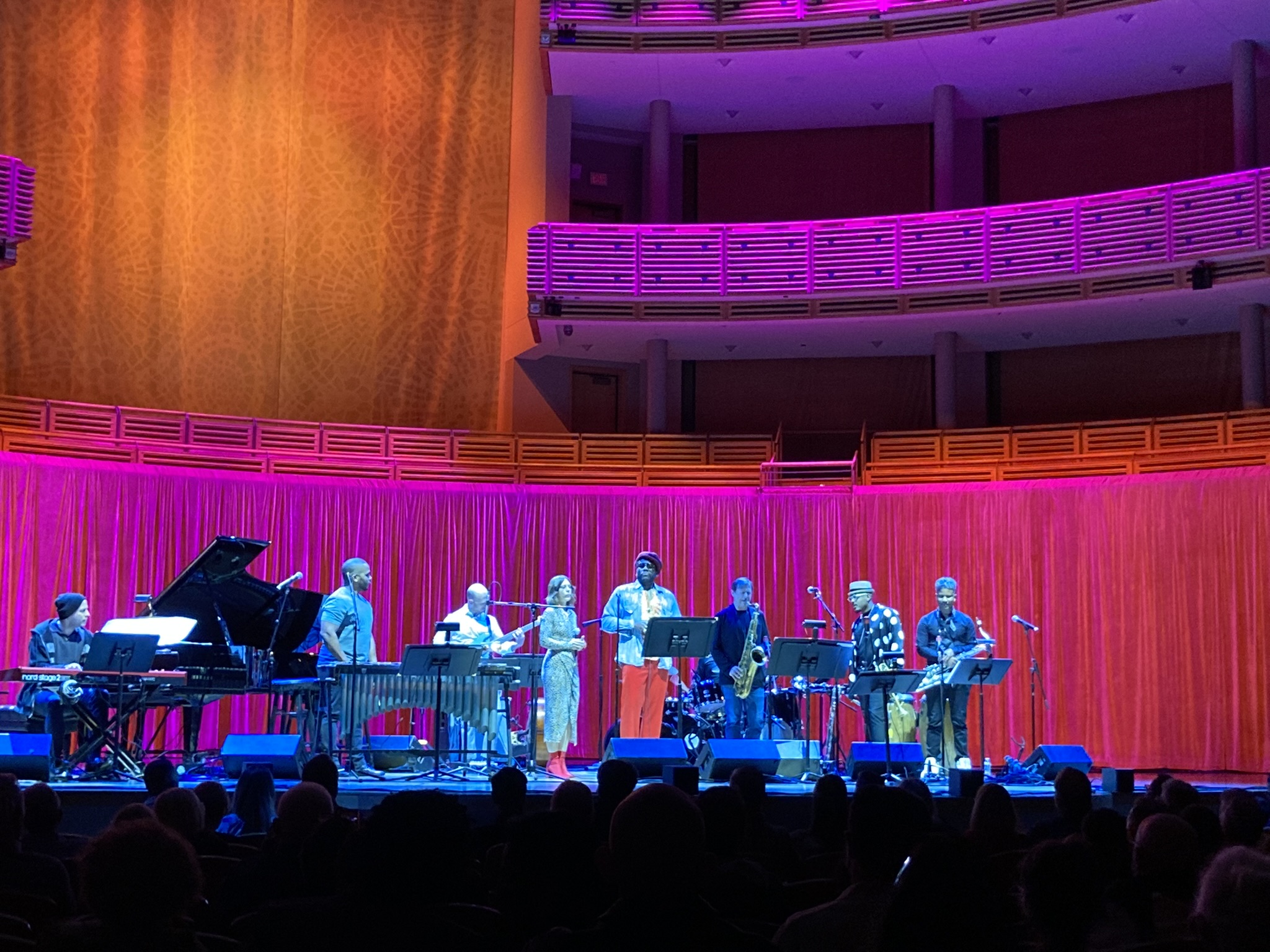
SFJAZZ Collective, at the Arsht Center for the Performing Arts, Miami, Friday.
The SFJazz Collective, the composer’s workshop and resident ensemble at SFJAZZ, the San Francisco-based non-profit organization dedicated to jazz, usually interprets original, newly commissioned pieces and arrangements by each of its members reflecting on the music of a master artist. But then the turbulent past couple of years made the collective set aside exploring the music of Joni Mitchell and, in a time-honored jazz tradition, address some of the social issues of the day.
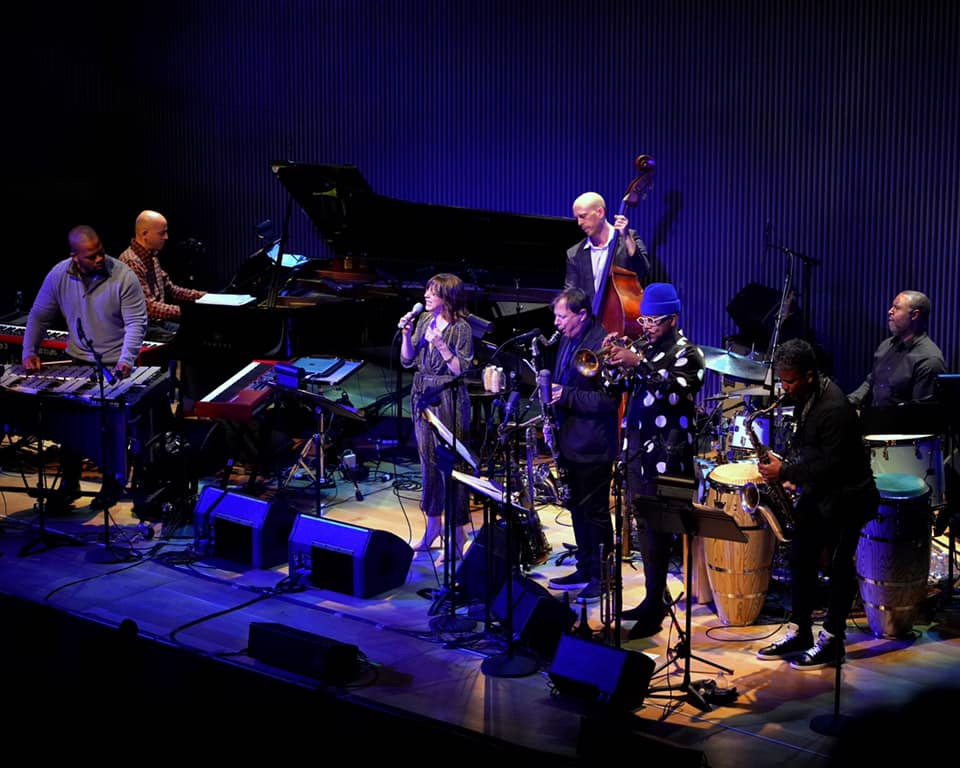
Comprising vocalists Gretchen Parlato and Martin Luther McCoy; saxophonists Chris Potter and David Sánchez; trumpeter Etienne Charles, pianist Edward Simon; vibraphonist Warren Wolf; bassist Matt Brewer; and drummer Kendrick A.D. Scott, the Collective performed at the Arsht Center, Miami, Friday, Reflecting the Times. The program, which included classic songs (new arrangements of “Lift Every Voice and Sing” and Marvin Gaye’s classic “What’s Going On?”) and new compositions, focused on the past year’s events, most notably the fight for racial justice and the Black Lives Matter movement.
Turning music into a blunt instrument for change sounds like a noble idea, but it’s fraught with perils. More often than not, and for many reasons, it’s a process that produces uninteresting music — which then makes it an ineffective tool.
Social and political statements were rarely made more clearly and forcefully Friday than by the sheer beauty of the music and the quality of the playing.
The most compelling moment might have been Simon’s tender “8:46,” its title a direct reference to the murder of George Floyd by a Minneapolis police officer. But then, Potter’s medley “Can You See” and “Mutuality” took us from anguish, anger, and frustration (the first part was written on January 7, 2021, the day after the failed insurrection) to hope, the second half of the piece having been inspired by Rev. Martin Luther King’s “Birmingham Letter.”
If someone expected fiery calls to the barricade Friday, they might have left disappointed. What we heard instead was a thoughtful, heartfelt meditation on where we are, how we got here, and which direction might be forward. If there was a clear message, it was in the music-making.
The better jazz players are, first, great listeners.
Listening might not be a bad place for all of us as a society to start.

 Jazz With an Accent