• Home
  • About
  • Contact

Jazz With an Accent

~ Global music in the 21st century

Jazz With an Accent

Author Archives: Fernando González

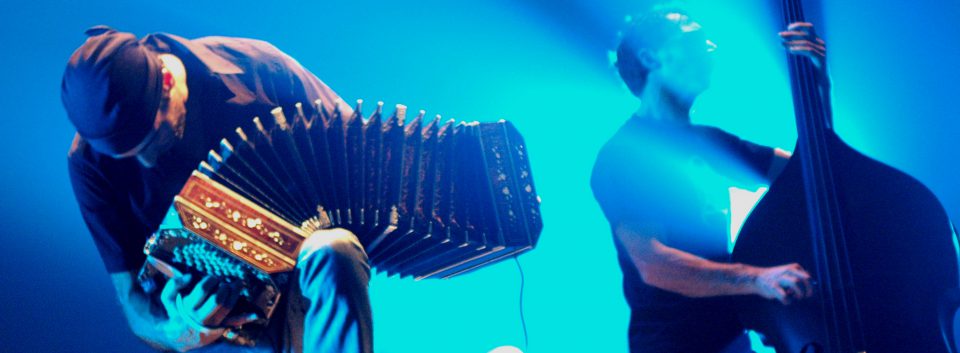
Astor Piazzolla … y en el 3000 también

24 Wednesday Feb 2021

Posted by Fernando González in Home

≈ Leave a comment

Astor Piazzolla por Charles Reilly

“Tengo un ilusión: Que mi obra se escuche en 2020. Y en el 3000 también”. Astor Piazzolla

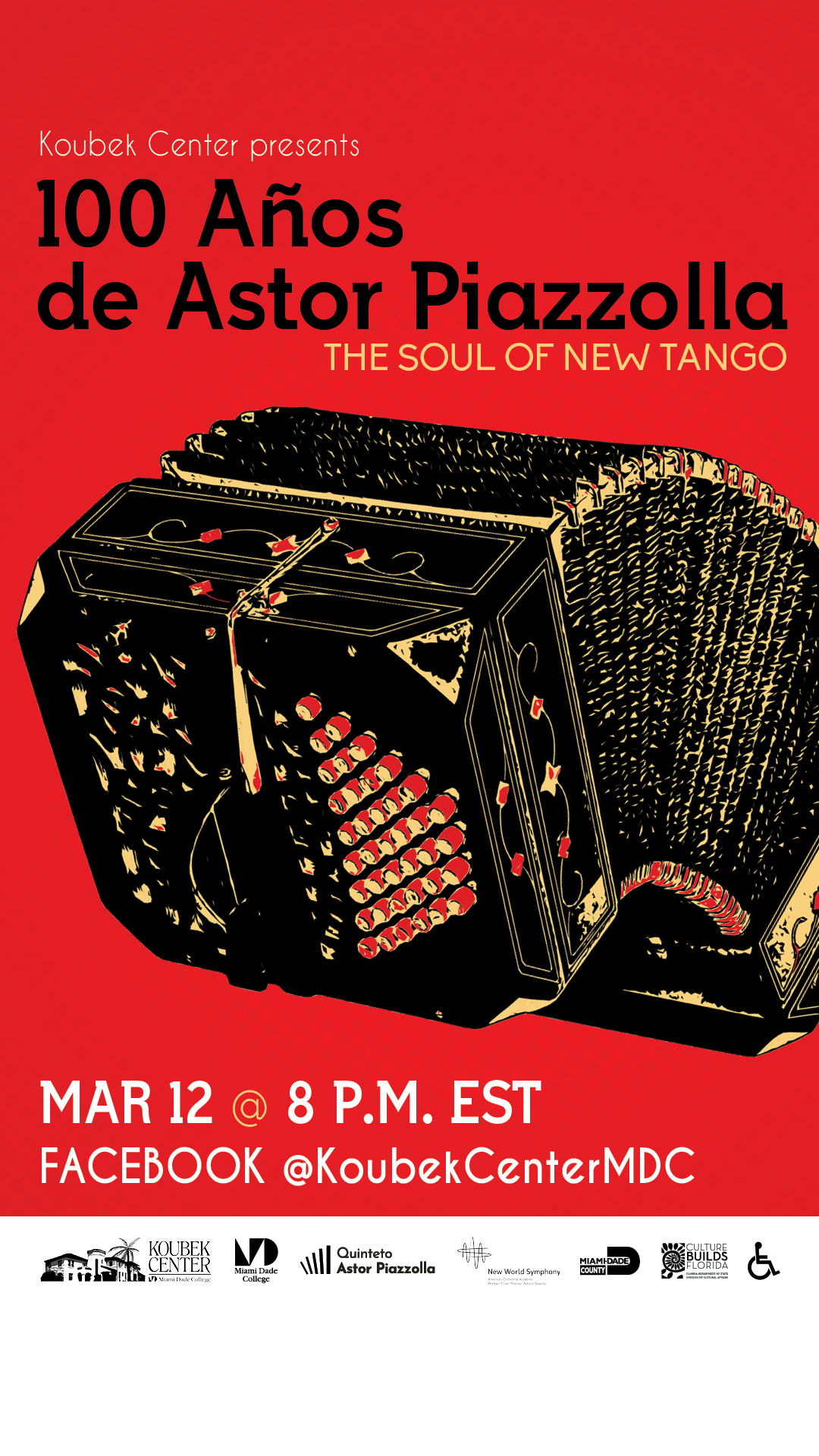
El bandoneonista y compositor argentino Astor Piazzolla, creador del Nuevo Tango, habría cumplido 100 años este 11 de marzo.

Murió en 1992 a los 71 años. Pero para entonces, su música, una insolente reescritura de las reglas del tango a partir de fuentes tan dispares como el jazz, la música clásica europea y el klezmer, ya lo había convertido en una figura internacional.

Piazzolla, quien alguna vez fue hasta violentamente rechazado en su país, atrajo al Nuevo Tango público de todo el mundo y ganó admiradores y defensores tan dispares como Mstislav Rostropovich, Yo-Yo Ma, Gil Evans, Al DiMeola, Gary Burton y Grace Jones.

Quizás la mejor revancha fue para el joven Piazzolla quien, como estudiante de música clásica de día y músico de tango por las noches, había soñado con ser un compositor clásico en la tradición europea. No le fue necesario imitar a nadie. Unas décadas mas tarde, Piazzolla no sólo llegó a dirigir sus conjuntos en los templos de la música clásica sino también a escuchar su Nuevo Tango interpretado por orquestas sinfónicas, grupos de cámara y cuartetos de cuerda.

Ser Piazzolla resultó ser suficiente.

Para renovar tradiciones y desafiar hábitos profundamente arraigados en una cultura, a veces se necesita alguien foráneo, alguien “de afuera”. Piazzolla, que no nació en Buenos Aires, la capital del tango, sino en Mar del Plata, una ciudad costera a unos 400 km al sur de Buenos Aires, y que luego creció hasta los 17 años en el duro Lower East Side de Manhattan en los años ’20, fue el eterno forastero, por destino y por elección.

Recibió su primer bandoneón como regalo de su padre, un amante del tango, y comenzó a estudiarlo sin mucho interés, para complacerlo. En esa época en Nueva York no había mucho de donde elegir en la búsqueda de profesores de bandoneón, así que Piazzolla se las arregló probando los botones de esa caja misteriosa, estudiando con pianistas, y adaptando al bandoneón la música de Bach y Schuman que aprendía de sus maestros de barrio.

Cuando la familia regresó a Argentina, no hablaba muy bien el castellano. “Mi madre me hablaba en español y yo le respondía en inglés”, me dijo una vez.

Después de un tiempo en Mar del Plata, Piazzolla se trasladó a Buenos Aires — y para su primera audición como bandoneonista en una orquesta de tango se le ocurrió tocar algo de Mozart y de Gershwin.  “Dejate de fantasías, pibe”, le dijo “El Tano” Lauro, el director. “Tocate un tango en cuatro, chan chan, chan chan”. Le dieron el puesto, claro.

Pronto consiguió trabajo tocando y arreglando para Aníbal Troilo, gran bandoneonista y compositor que dirigía una de las mejores orquestas de tango de la época. Aún así, en el mundo del tango, Piazzolla era un bicho raro con talento. Ni siquiera Troilo le bastó musicalmente. Comenzó a estudiar con el gran compositor clásico Alberto Ginastera (fue su primer alumno) organizó su propia orquesta, escribió música para el cine y, harto de las miserias del mundo de los cabarets y de las limitaciones musicales del género, abandonó el tango.

En 1954, con 33 años, Piazzolla ganó una beca para estudiar en París, Francia, con la legendaria Nadia Boulanger, maestra de Aaron Copland, Darius Milhaud y Elliot Carter, entre otros.

A ella no le impresionó su escritura clásica pero, años más tarde, Piazzolla recordaba con cariño la escena en la que Mlle. Boulanger le pidió que tocara algo más, lo que fuera que tocaba allá en su país. Un poco mortificado, empezó con “Triunfal”, uno de sus tangos, y tras unos compases ella lo paró. “Este es Piazzolla”, le dijo. “No lo dejes nunca”.

La bendición de la gran maestra lo reenfocó y le renovó sus energías. Volvió a Argentina, y en 1955 organizó un extraordinario octeto (inspirado, decía, en el Tentet de Gerry Mulligan) que marcó un antes y un después en el tango.

Al ignorar las demandas de la pista de baile y buscar algo más que repetir los clichés de la música, Piazzolla, el hombre al que muchos acusaron de matar el tango, lo salvó, quizás especialmente, de sí mismo.

En su Nuevo Tango, Piazzolla mantuvo la emoción del tango pero evitó su tendencia a la mórbida nostalgia y la autocompasión. Su escritura era elegante y cosmopolita, pero también visceral. Trajo al tango un nuevo vocabulario armónico y rítmico, con guiños al jazz, y al trabajo de Bártok y Stravinsky, melodías operáticas y temas presentados en forma de fugas a tres voces. La suma resultó en un sonido agresivo pero también lírico, conmovedor en su áspera ternura. Y aunque era un maestro del bandoneón, su mejor instrumento fue quizás el quinteto – una agrupación del mundo del jazz, no del tango – compuesto por bandoneón, piano, contrabajo, violín y guitarra eléctrica.

Piazzolla trataba a sus quintetos como orquestas en miniatura, pero también les decía a sus músicos que la música tenía que tener mugre, sugiriendo suciedad, calle.

Su Nuevo Tango vive en la perfección de la imperfección. Su humanidad le hizo inmortal.

Fernando González tradujo y anotó las “Memorias” de Astor Piazzolla (contadas a Natalio Gorin) Amadeus Press, 2001; y escribió las notas de tapa de cuatro discos de AstorPiazzolla en los años 80.

Una versión en inglés de este ensayo fue publicado en la revista JAZZIZ

Share this:

  • Share on Facebook (Opens in new window) Facebook
  • Share on X (Opens in new window) X
  • Email a link to a friend (Opens in new window) Email
  • Share on LinkedIn (Opens in new window) LinkedIn
Like Loading...

Chick Corea, in the words and music of Chucho Valdés

15 Monday Feb 2021

Posted by Fernando González in Home

≈ Leave a comment

Chick Corea and Chucho Valdés at a rehearsal space, in the days before their joint appearance at Jazz @ Lincoln Center, November 2019. Photo courtesy of Lorena Salcedo Valdés ©

The announcement of the death of keyboardist composer and bandleader Chick Corea on February 9 at 79 brought about shock, sadness, and a flood of deserved praise. But the announcement also delivered one last composition by Corea, as vital and generous as so much of his music.

“I want to thank all of those along my journey who have helped keep the music fires burning bright,” wrote Corea. “It is my hope that those who have an inkling to play, write, perform or otherwise, do so. If not for yourself then for the rest of us. It’s not only that the world needs more artists, it’s also just a lot of fun.”

“And to my amazing musician friends who have been like family to me as long as I’ve known you: It has been a blessing and an honor learning from and playing with all of you. My mission has always been to bring the joy of creating anywhere I could, and to have done so with all the artists that I admire so dearly — this has been the richness of my life.”

One of those musicians was Cuban pianist, composer, and bandleader Chucho Valdés, 79, a longtime fan of Corea. It was not surprising then that, when offered a choice of a guest for his concerts at Jazz at Lincoln Center in November 2019, Valdés chose Corea.

Days after the announcement, Valdés still sounded shaken by the news.

“As a musician, I believe every pianist in the world has learned something from him,” said Valdés. “As a human being, I was amazed by his greatness, his simplicity, and his humanity. Vaya, I have no words to describe him. In my life, I’ve met few people like him.”

He recalled first hearing of Corea back in Havana in the late 60s when the closely-knit community of jazz musicians and fans got most of their news and music listening to Willis Conover’s “Jazz Hour” on The Voice of America.  

“That’s how I had discovered Herbie [Hancock],” he noted. “But it was Carlos Emilio [Morales, his long time friend and guitarist of Irakere) who came and told me ‘I heard on Willis Conover a new record by Stan Getz. Man, he has a pianist that’s out of this world. His name is Chick Corea.’ It was 1967, and that’s when I started listening to Corea, and of course, then came Return to Forever and from then on, I followed his career to this day.”

They eventually met at a jazz festival in Sardinia in the 1980s, “and then we crossed paths at many festivals,” recalled Valdés.

“Sometimes, with people you admire, you can’t believe that they are gone. Chick dead? It can’t be,” he added. “Look, for me, Chick has left such a big void, not only in jazz but in music, that it will be very difficult to fill.”

Share this:

  • Share on Facebook (Opens in new window) Facebook
  • Share on X (Opens in new window) X
  • Email a link to a friend (Opens in new window) Email
  • Share on LinkedIn (Opens in new window) LinkedIn
Like Loading...

Matthew Whitaker at the South Beach Jazz Festival

13 Wednesday Jan 2021

Posted by Fernando González in Home

≈ Leave a comment

When pianist and organist Matthew Whitaker closed his concert at the South Beach Jazz Festival in Miami Beach on January 8 with Kool & The Gang’s “Celebration,” for a moment, months of fear and isolation seemed to dissipate. A few in the properly distanced, limited-numbered audience at the open-air North Beach Bandshell got up and danced. It felt equal parts a gesture of release and defiance. For many of us, the simple act of attending a live show and sharing the music with a group of fellow human beings, in person, even if at a distance and with masks, was both extraordinary and wonderfully mundane.

There was nothing ordinary about Whitaker, however. A blind, prodigiously talented 19 year old (he won’t be 20 until April) with a light touch and quick hands, he was fearless enough to jump in the deep end of bop, classic 70s electric fusion, R&B, Latin jazz — and bring to the party a couple of original tunes.

Backed by his regular quartet — Marcos Robinson, guitar; Karim Hutton, bass; and Isaiah Johnson, drums — Whitaker zigged and zagged unhurriedly between Eddie Harris’ “Freedom Jazz Dance,” Charlie Parker’s “Yardbird Suite” (which he approached in an organ trio format), and Herbie Hancock’s “Actual Proof ” — before turning left and revisiting Jorge Ben’s “Mas Que Nada,”  a hit for Sergio Mendes in the 60s, his own piece “Emotions,” and for good measure, Earth Wind & Fire’s catchy “September.”

But Whitaker does not seem to program this material for the sake of nostalgia or as a revivalist. As promising as he appeared as a player, he sounded just as intriguing as an arranger. With his song choices, he sometimes suggested an archeologist going through old artifacts, trying to understand what life was like back then — only to put it back together his own way. Every piece seemed to have several time signatures, a couple of tempo changes, and harmonic passageways to unexpected resolutions. He good-naturedly poked and pulled at the material, as if to find what else might be there, how far it would stretch, whether it was Chick Corea’s speed test “Got a Match?” or Deniece Williams’s anthemic “Black Butterfly.”

An astounding facility at the keyboards, a curious mind, and an engaging presence as a performer make a great combination. Whitaker has justly gained a lot of recognition and applause at a young age; more, no doubt, is to come.

A note about the festival: Whitaker was an inspired choice to launch the fifth edition of this three-day South Beach Jazz Festival, a fundraiser for the non-profit organization, Power Access which has as a goal “to bring awareness to the community about people living with disabilities and to provide opportunities for those people.” The Festival, by design, “takes pride in featuring world-renowned musicians who also have disabilities.” Another reason to celebrate.

Photo courtesy Harvey Burnstein of MiamiArtzine

This story appeared in JAZZIZ Magazine

Share this:

  • Share on Facebook (Opens in new window) Facebook
  • Share on X (Opens in new window) X
  • Email a link to a friend (Opens in new window) Email
  • Share on LinkedIn (Opens in new window) LinkedIn
Like Loading...
← Older posts
Newer posts →

Search

Categories

  • Home
  • In Other Words
  • On Music
    • Jazz
    • Latin Jazz

Recent Posts

  • Ignoring Musical Borders and Embracing Discovery, The GroundUP Music Festival Celebrates Its 10th Anniversary
  • Traditions renewed: A Bomba y Plena big band and Caribbean hip-hop with a Miami accent.
  • “¡Viva La Parranda!” Music, stories, wisdom, and soup from a small Venezuelan town

Archives

  • March 2026
  • July 2025
  • April 2025
  • January 2025
  • November 2024
  • October 2024
  • September 2024
  • August 2024
  • July 2024
  • June 2024
  • May 2024
  • March 2024
  • February 2024
  • June 2023
  • May 2023
  • April 2023
  • February 2023
  • December 2022
  • November 2022
  • September 2022
  • June 2022
  • April 2022
  • March 2022
  • January 2022
  • December 2021
  • November 2021
  • September 2021
  • August 2021
  • March 2021
  • February 2021
  • January 2021
  • July 2020
  • June 2020
  • May 2020
  • April 2020
  • March 2020
  • February 2020
  • January 2020
  • December 2019
  • November 2019
  • October 2019
  • September 2019
  • July 2019
  • June 2019
  • May 2019
  • April 2019
  • March 2019
  • February 2019
  • November 2018
  • October 2018
  • September 2018
  • August 2018
  • July 2018
  • June 2018
  • May 2018
  • April 2018
  • March 2018
  • February 2018
  • October 2017
  • June 2017
  • May 2017
  • April 2017
  • March 2017
  • February 2017
  • January 2017
  • October 2016
  • May 2016
  • April 2016
  • March 2016
  • February 2016
  • January 2016
  • November 2015
  • October 2015
  • September 2015
  • June 2015
  • May 2015
  • April 2015
  • January 2015
  • October 2014
  • September 2014
  • August 2014
  • July 2014
  • June 2012
  • May 2012
  • December 2011
  • September 2011
  • August 2011
  • May 2011
  • December 2009
  • September 2009
  • December 2007
  • January 2001
  • September 1995
  • December 1994
  • November 1987

Archives

  • March 2026
  • July 2025
  • April 2025
  • January 2025
  • November 2024
  • October 2024
  • September 2024
  • August 2024
  • July 2024
  • June 2024
  • May 2024
  • March 2024
  • February 2024
  • June 2023
  • May 2023
  • April 2023
  • February 2023
  • December 2022
  • November 2022
  • September 2022
  • June 2022
  • April 2022
  • March 2022
  • January 2022
  • December 2021
  • November 2021
  • September 2021
  • August 2021
  • March 2021
  • February 2021
  • January 2021
  • July 2020
  • June 2020
  • May 2020
  • April 2020
  • March 2020
  • February 2020
  • January 2020
  • December 2019
  • November 2019
  • October 2019
  • September 2019
  • July 2019
  • June 2019
  • May 2019
  • April 2019
  • March 2019
  • February 2019
  • November 2018
  • October 2018
  • September 2018
  • August 2018
  • July 2018
  • June 2018
  • May 2018
  • April 2018
  • March 2018
  • February 2018
  • October 2017
  • June 2017
  • May 2017
  • April 2017
  • March 2017
  • February 2017
  • January 2017
  • October 2016
  • May 2016
  • April 2016
  • March 2016
  • February 2016
  • January 2016
  • November 2015
  • October 2015
  • September 2015
  • June 2015
  • May 2015
  • April 2015
  • January 2015
  • October 2014
  • September 2014
  • August 2014
  • July 2014
  • June 2012
  • May 2012
  • December 2011
  • September 2011
  • August 2011
  • May 2011
  • December 2009
  • September 2009
  • December 2007
  • January 2001
  • September 1995
  • December 1994
  • November 1987

RECENT TWEETS

Tweets by FergonzMIA

Categories

  • Home
  • In Other Words
  • On Music
    • Jazz
    • Latin Jazz

Archives

CONTACT INFO

P.O. Box 402702 Miami Beach FL 33140 - 0702 USA fernando@fgonow.com

Blog at WordPress.com.

  • Subscribe Subscribed
    • Jazz With an Accent
    • Join 31 other subscribers
    • Already have a WordPress.com account? Log in now.
    • Jazz With an Accent
    • Subscribe Subscribed
    • Sign up
    • Log in
    • Report this content
    • View site in Reader
    • Manage subscriptions
    • Collapse this bar

Loading Comments...

    %d