Legacy The Music of Astor Piazzolla by Tomás Cotik and Tao Lin


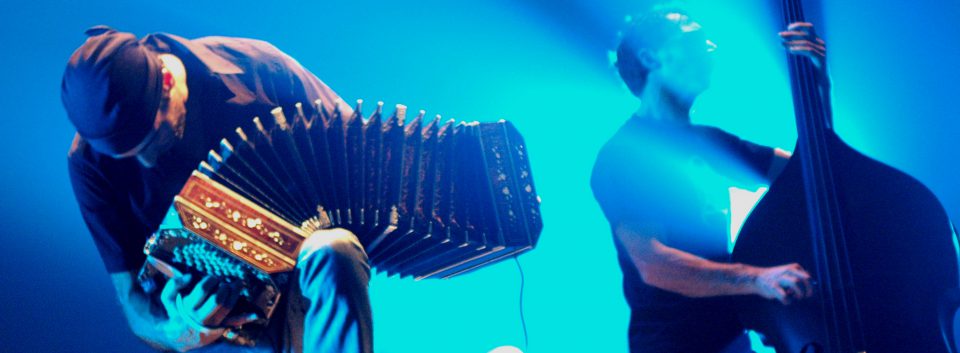
Very happy to share the news of the release of Legacy, a new recording of music by New Tango master Astor Piazzolla interpreted by violinist Tomás Cotik and pianist Tao Lin.
The program includes classics such as “Adiós Nonino”, “Milonga del Ángel”, Piazzolla’s Four Seasons”, “Balada para un loco” and two personal favorites, “Escualo” and “Fracanapa.”
For a one-stop place for information, videos and points of sale check Naxos.

Tomás and I had collaborated on a couple of Piazzolla-related projects during his time in Miami, so when he told me about Legacy, I jumped at the opportunity to write the liner notes. Piazzolla´s story and Tomás playing are tales worth telling.
I hope the notes intrigue you into checking this recording. You will not be disappointed.

Notes for Astor Piazzolla Legacy

New Tango master Astor Piazzolla (11 March 1921–4 July 1992) packed a lot of living in his writing and his playing.

Tango is the music of Buenos Aires — but the man who would challenge so many of its traditions and clichés, and in doing so would bring it kicking and screaming into a new world, was not even a porteño, as the inhabitants of Buenos Aires are called. Astor Piazzolla was born in Mar del Plata, a resort town on the Atlantic coast of Argentina, about 250 miles south of Buenos Aires. When he was just 4, his family moved to New York’s Lower East Side, then to a tough neighborhood populated by gangsters of seemingly every denomination. He was short and walked with limp because of a birth defect, so he fought his way to respect. The other kids called him “Lefty,” acknowledging his punch.

Continue reading

Honoring Paco De Lucía by keeping his sound alive

Group01

From left to right, Israel Suárez “Piraña,” percussion; Alain Pérez, bass; Antonio Sánchez, guitar; Antonio Serrano, harmonica; David De Jacoba, cante, and Farru, dancer. Photo by Luis Malibran

There are few artists who have had the impact in their disciplines that guitarist Paco De Lucía had in flamenco. There is a before-and-after De Lucía in flamenco. He expanded the harmonic vocabulary and guitar techniques, incorporated instruments from outside the tradition, and had a curiosity that led him to collaborations with artists as disparate as jazz guitarist John McLaughlin and Brazilian pop star Djavan and also opened new vistas to flamenco artists.

He also worked with unorthodox (for flamenco) ensembles, most notably his revolutionary sextet, which included sax, electric bass, and cajón, in the 1980s and ‘90s and then later, for 10 years, until his passing in February 2014, his septet.

This remarkable group has been re-assembled by producer Javier Limón, a long-time friend, and collaborator of De Lucía, and will be performing a tribute at the Olympia Theater in downtown Miami this Sunday, presented by The Rhythm Foundation.

Continue reading

Cuba, Haiti And A History In Music

For more than 20 years, dear friend and former colleague from The Miami Herald, photographer Carl Juste has been working on Havana-Haiti, an extraordinary project exploring the connections between Cuban and Haitian history and culture.
He has assembled a terrific group of photographers and writers, each addressing a different issue –from labor and religion, to history and hope.
It will be a privilege to be part of the project and contribute an essay about the cross-pollination between the Cuban and Haitian musical traditions.
One of the artists we are focusing on to tell that part of the story is pianist and composer Omar Sosa, from Camagüey, Cuba. His work explores the culture of the African diaspora and the seemingly endless permutations and combinations of African-rooted musical traditions.
Sosa is currently crowdfunding a sextet project featuring saxophonist Jacques Schwarz-Bart and singers and players from both the Santeria and Vodou traditions.
The video is from his Transparent Water project with Seckou Keita.
(Sosa and Keita will be presenting Transparent Water in Miami in March.)