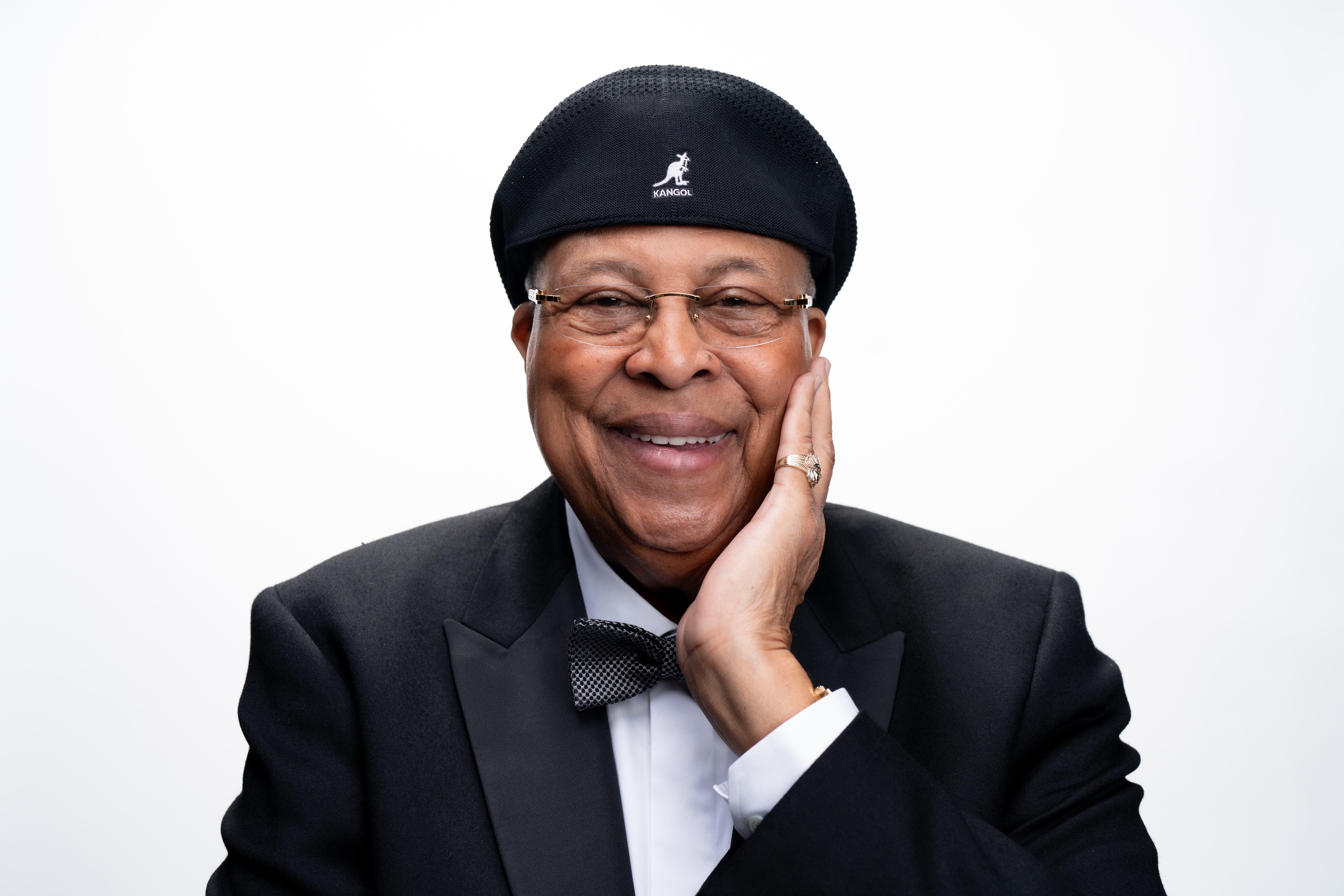
As he discusses preparations for his 85th birthday celebration at the Knight Concert Hall in Miami this Saturday, October 3, NEA Jazz Master and winner of seven Grammy and seven Latin Grammy Awards, pianist, composer, and bandleader Jesús “Chucho” Valdés sounds almost giddy.
“The group I’ll be playing with is very interesting because I chose some of the many musicians who have influenced me the most throughout my career,” he says, in a conversation in Spanish from his home in South Florida. “So, I thought of Terence Blanchard on trumpet; Joe Lovano, on tenor sax; Marcus Gilmore on drums; John Patitucci on bass; and Roberto Jr. Vizcaíno (a member of Valdés’ Royal Quartet) on percussion.”
“And the setlist we’re going to perform will consist of standards, the songs I played in my early days. It was the foundation of everything that came after — and we’re going to do it all without rehearsing. We’re going to improvise,” he says with a chuckle. He mentions classics such as Charlie Parker’s “Confirmation,” Dizzy Gillespie’s “Groovin’ High,”; and “St. Thomas” by the late Sonny Rollins.
It suggests both, a return to the beginnings of an extraordinary career spanning more than 60 years, and a tribute to improvisation and the defining art in jazz of creating compositions within compositions on the fly.
The approach follows Valdes’ path in recent years. This past decade has been marked by glances back as he moved forward, such as the recording of “Jazz Bata 2,” in 2018, which revisited the daring idea of a piano jazz trio featuring batá drums that he first explored in 1972; or the reunion in 2022 with his long-time friend and musical co-conspirator, reedman Paquito D’Rivera, after more than 40 years apart. And then there was Irakere 50, a 2024 celebration of 50th anniversary of the Afro-Cuban-jazz-rock fusion group Valdés co-founded, directed, and for which he was the principal composer and arranger. The concert was highlighted by the presence of two key players of the original Irakere: trumpeter Arturo Sandoval and D’Rivera.
Both events took place at the Arsht Center.
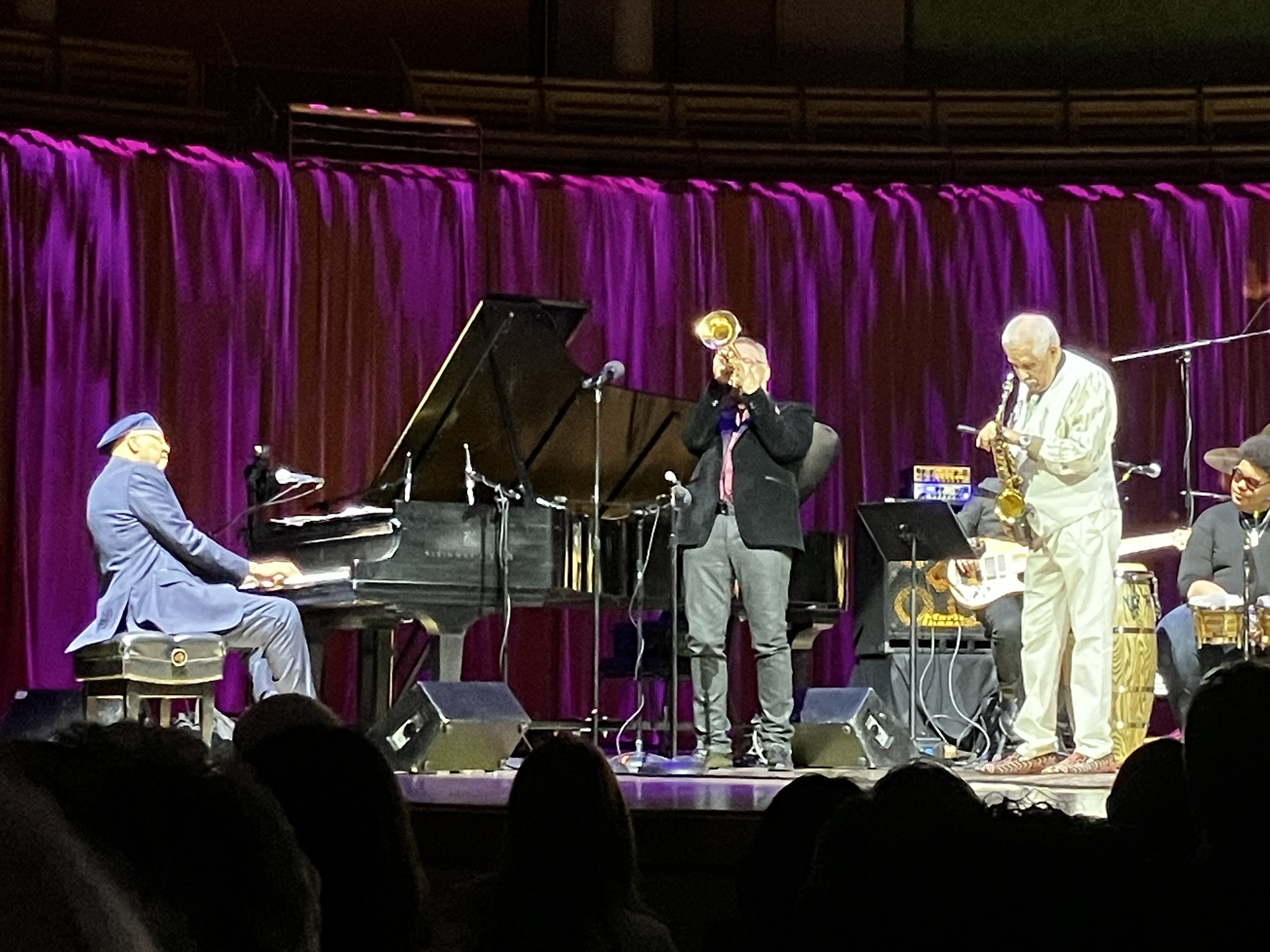
Chucho Valdés, piano, Arturo Sandoval, trumpet, and Paquito D’Rivera, saxophone, performing variations on “Body and Soul” at the Irakere 50 tribute and celebration at the Arsht Center in Miami, in 2024.
Even new works such as La Creación (The Creation), an ambitious three-movement suite for small ensemble, voices, and big band commissioned in part by, and premiered at, the Adrianne Arsht Center in 2021, suggested a composer taking the long view and summing up his musical searches up to that point.
But when asked to glance back and speak about special moments in his long career, Valdés doesn’t hesitate: being named the 2025 National Endowment for the Arts Jazz Master. The distinction, as noted in the NEA announcement, honors “a select number of living legends who have made exceptional contributions to the advancement of jazz.”
It is the highest honor the United States bestows on jazz artists.
“Many important things that have happened all these years, but being named an NEA Jazz Master was like touching the sky with my hands,” he says. “To have made a contribution, to be recognized globally, and to have that confirmed by being named an NEA Jazz Master is for me, the ultimate achievement.”
But then, there are also moments that mark a before and after in Valdés´ story, such as the debut of Irakere at Carnegie Hall, as part of the Newport Jazz Festival on June 28, 1978. The program was titled ‘Three pianos and two guitars,’ and featured pianists Bill Evans, Mary Lou Williams, McCoy Tyner, and guitarists Larry Coryell and Philip Catherine. The 11-piece Irakere was an added attraction, but one whose appearance had been preceded by a buzz among jazz fans. Here was this Cuban band that played a blend of jazz, Afro-Cuban ritual music, Cuban popular music styles, rock, and even classical music with dazzling virtuosity. And the buzz was justified. By the end of the evening, the star cast “had almost been forgotten in the wake of an unannounced added attraction, Irakere,” wrote John Wilson in his chronicle for The New York Times. The concert had turned into a celebration. “The group created a carnival air in Carnegie Hall,” wrote Wilson. The following year, Irakere won a Grammy of the live recording from that evening.
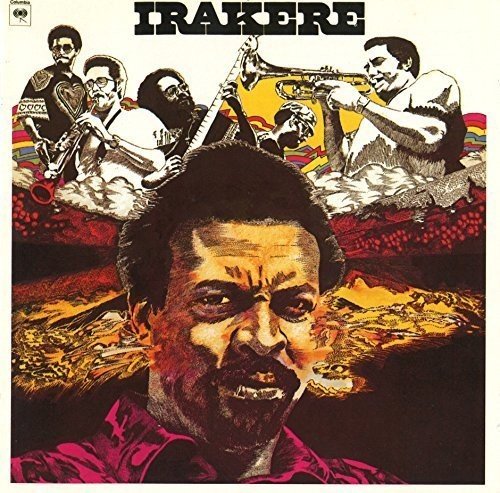
Released in 1979, the first recording of Irakere in the United States featured tracks recorded live at the Newport Jazz Festival at Carnegie Hall and the Montreux Jazz Festival. The following year, it won a GRAMMY for Best Latin Recording
“Now, that night was the greatest moment up until the NEA award,” he says, breaking into a laugh. “How amazing. At Carnegie Hall with Irakere! And everybody was there. The place was packed with musicians: Dizzy Gillespie, Maynard Ferguson, Stan Getz. Everyone was there. And that was not the best of it,” he says, his voice trailing off.
His father, pianist and composer Bebo Valdés, had left Cuba in 1960 and was then living in exile in Sweden, was there to witness it. “I knew he was there but we had only spoken on the phone. And I hadn’t seen him in 18 years,” recalled Valdés.
“On stage, my hands were shaking knowing that Bebo was watching me after all this time,” he once told me. Bebo was not only his beloved father but his first teacher, his mentor, and the model of musician he aspired to be.

Chucho Valdés, then a teenager, in his first professional engagement, playing piano in his father´s orchestra Sabor de Cuba. Bebo Valdés conducting on the right.
The reunion marked a new beginning in their relationship. Decades later, in 2008, they would record a piano duet album, simply titled “Juntos Para Siempre,” (Together Forever) that featured a couple of Bebo’s pieces, and Cuban and jazz standards. It won both a GRAMMY and a Latin GRAMMY.
That evening at Carnegie Hall “ was a historic night for me in so many ways,” says Valdés.
Another unforgettable encounter that night, had a friend’s laughter in the soundtrack.
“After the concert, backstage, Paquito comes over and says, ‘Chucho, this guy told me that you play really well and that he wants to meet you.’ And here comes this guy with glasses and a beard and I’m like, OK, I don’t know him but, OK, of course, and I say ‘Hello’ and shake his hand, and Paquito starts to laugh,” recalls Valdes. “ ‘Chucho, it’s Bill Evans!!’ Paquito knew how passionate I was about Bill Evans. But the only information I had about him came from the few records I owned. On “Live at the Village Vanguard”, he didn’t have a beard; he looked like a completely different person now. I almost fell over right then and there — and Paquito, of course, was laughing his head off.”
The difference between very good and superior musicians is often not what they can play but what they choose not to play, how they listen to, and serve, the needs of the music. Valdés, a gifted pianist of impeccable technique, notes that, “What remains most important from all these years, is that I’ve kept evolving. Right now, I’m very introspective. It’s not forced minimalism. It’s just that life and experience have taught me that less is more. And I’m playing a lot like that now. I think of it as a poetry phase. Poetry and communication – without fanfare.”
An edited version of this story first appeared in the digital arts magazine Artburst Miami


Great article, Fernando!!!Daniel Freiberg☎ 1 914 514-0473 daniel@danielfreiberg.comhttp://www.danielfreiberg.comSent from my iPhone
Daniel querido, Gracias. Sos muy generoso no solo por el comentario sino por haberte tomado el tiempo de leerlo.Mil Gracias. Espero estes muy bien. Nos debemos una charla paronto. Un fuerte abrazo