

Making music sound difficult is easy. Creating subtly subversive music and making it sound easy demands a special talent. Brazilian composer Antonio Carlos Jobim made a mark in American culture with music of deceptive simplicity.
Part of the repertoire in concert halls or heard in the piped-in music in malls or elevators, his songs are by now part of the American soundtrack, from “Desafinado,” his first US hit in 1962, and “Garota de Ipanema” (The Girl from Ipanema), a massive, global hit in 1965, to “Chega De Saudade” (No More Blues), “Insensatez” (How Insensitive), and “Aguas de Março” (Waters of March).
Antonio Carlos Brasileiro de Almeida Jobim was also known as Tom Jobim, a variant of Ton Ton, the nickname his sister Helena once gave him. “Ah, the critics in Brazil began to say, ‘Tom is an American name.’ ,” he once lamented in an interview, throwing his hands up in mock despair.
The legacy of Jobim, who died in 1994 and would have been celebrating his 100th birthday next January 25, will be honored Friday (November 6) at the opening concert of the 2026-27 Jazz Roots series at the Knight Concert Hall at the Adrienne Arsht Center.
Titled “Jobim and The Music of Brazil,” the tribute features pianist and singer Eliane Elias, virtuoso clarinetist Anat Cohen, a non-Brazilian champion of Brazilian music; Trio da Paz, comprising guitarist Romero Lubambo, bassist Nilson Matta and drummer Duduka Da Fonseca; pianist Shelly Berg, and University of Miami Frost School of Music’s Henry Mancini Institute Orchestra with resident conductor Scott Flavin.
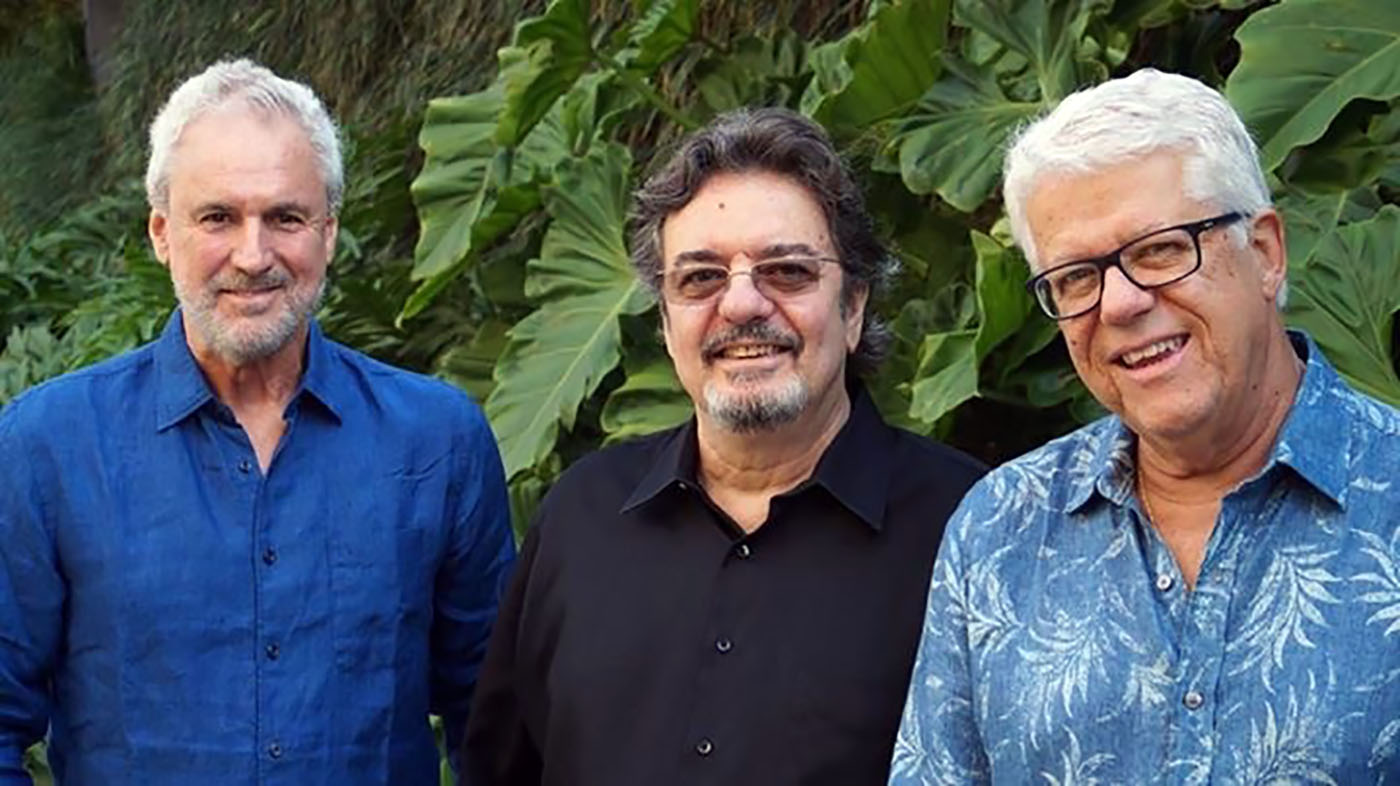
“Every year, as we’re thinking about the Jazz Roots opening concert, we discuss what artists we should honor,” says Berg, longtime dean of the Frost School of Music at the University of Miami and Jazz Roots Artistic Advisor. “Knowing that the Jobim Centennial was coming, we felt that this was appropriate, especially in Miami, a multicultural city. It is such beloved music and so important in the history of two streams of music, Brazilian music and jazz music that it was an easy decision — and a fun decision to make.”
“What makes Jobim’s music special? Jobim wrote beautiful melodies, but also really wonderful harmonic progressions, and because of his classical studies, he injected some classicism into the mix of jazz and Brazilian music and the result is unique — except you don’t realize that because it all works so well.”
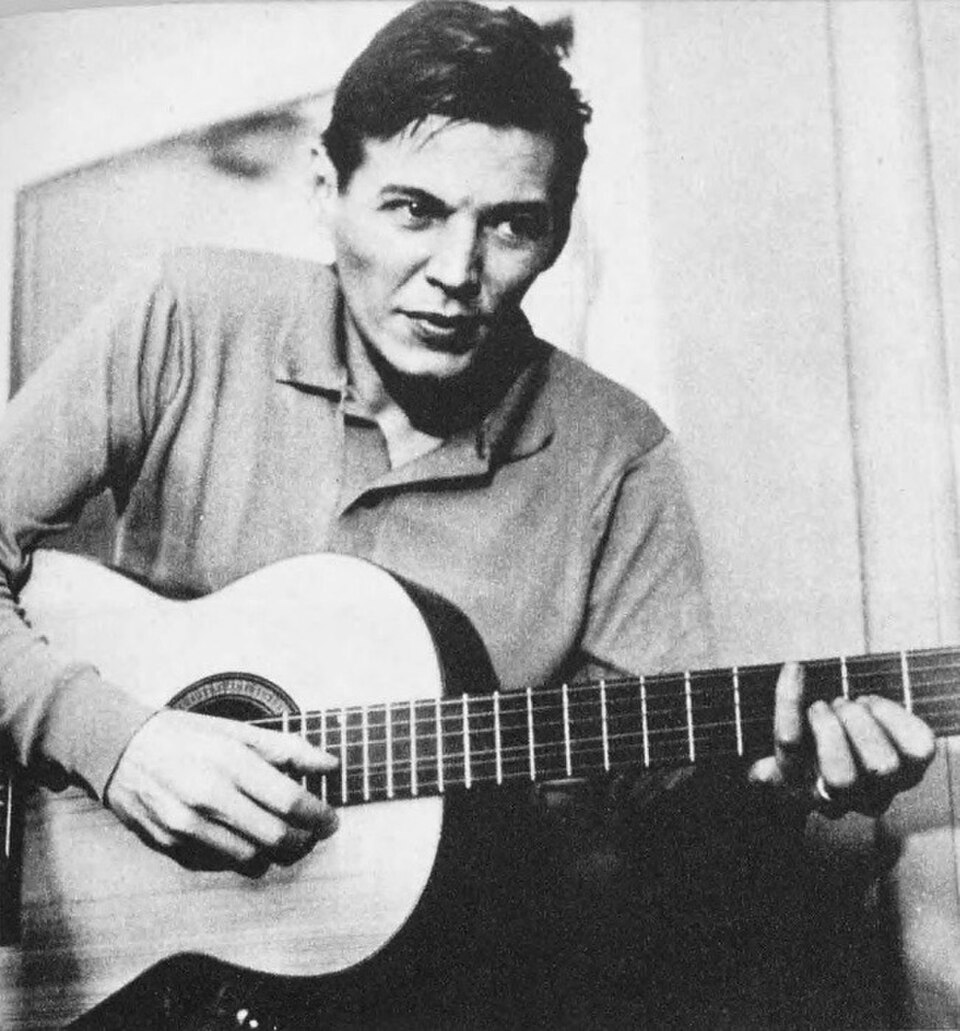
Rarely does music play such a discreet but fitting self-portrait of the man who wrote it.
“Sure, I pretend to be a simple man,” Jobim told me in an interview at his New York home in 1987. “I say this, and people get furious. Maybe it’s the language. In Portuguese, pretender means something else. It means to intend, to aspire. So, I intend to be a simple man. But I also pretend to be simple, presenting things in a simple way — but there’s always something under the surface.”
Eliane Elias laughs at hearing the quote.
Intending to be simple “is why he could reach so many people. He had this incredible way of writing music, just incredibly beautiful,” she says. Brazilian music and West Coast jazz were defining influences in Jobim’s writing, but so was his classical education. “He loved the romantics; he loved Chopin, the impressionist, Debussy and Ravel and Villa-Lobos, and that music, that beautiful baggage is part of his music. It’s a good thing that you can hear it playing in an elevator or a supermarket,” she says. “It also means that this music reaches everyone, that you went from a more intellectual audience to the simplest audience. And that’s the beauty of it.”
Elias got to meet and play with Jobim early in her career; she was still a teenager, and over the years has become a premier interpreter of Jobim’s music. She has released two strong albums of Jobim’s music: the instrumental Eliane Elias Plays Jobim (1990), which highlights the jazz influence in Jobim’s writing, and Eliane Elias Sings Jobim (1998), in which she revisited classic titles as a vocalist. Elias’ third album of Jobim’s music will be released next January to coincide with the centennial celebration.
Emerging in small spaces and clubs in Rio, bossa nova was a vocal, not a dance music. Jobim wrote some of the lyrics for his songs, but he also worked with exceptional lyricists such as Vinicius de Moraes and Newton Mendonça in Portuguese, and Gene Lees and Norman Gimbel for the English versions.
Bossa nova had no melodrama, not in the lyrics, and not in the delivery. Instead, the singing suggested a confidence shared with friends. Astrud Gilberto, who was not a professional singer when she recorded “The Girl from Ipanema” with her then husband Joao Gilberto and saxophonist Stan Getz, once explained that “One’s song should be as simple as human speech.”
“Singing bossa nova does require a certain approach,” notes Elias. “It’s not about powerful vocals or great vocal ranges, volume or power. It’s intimate; it’s about how you phrase the melody and lyrics, and how you sing to the rhythm of the song. It’s very, very particular. It’s not for demonstrations of technique. It’s about placement and how you say it.”
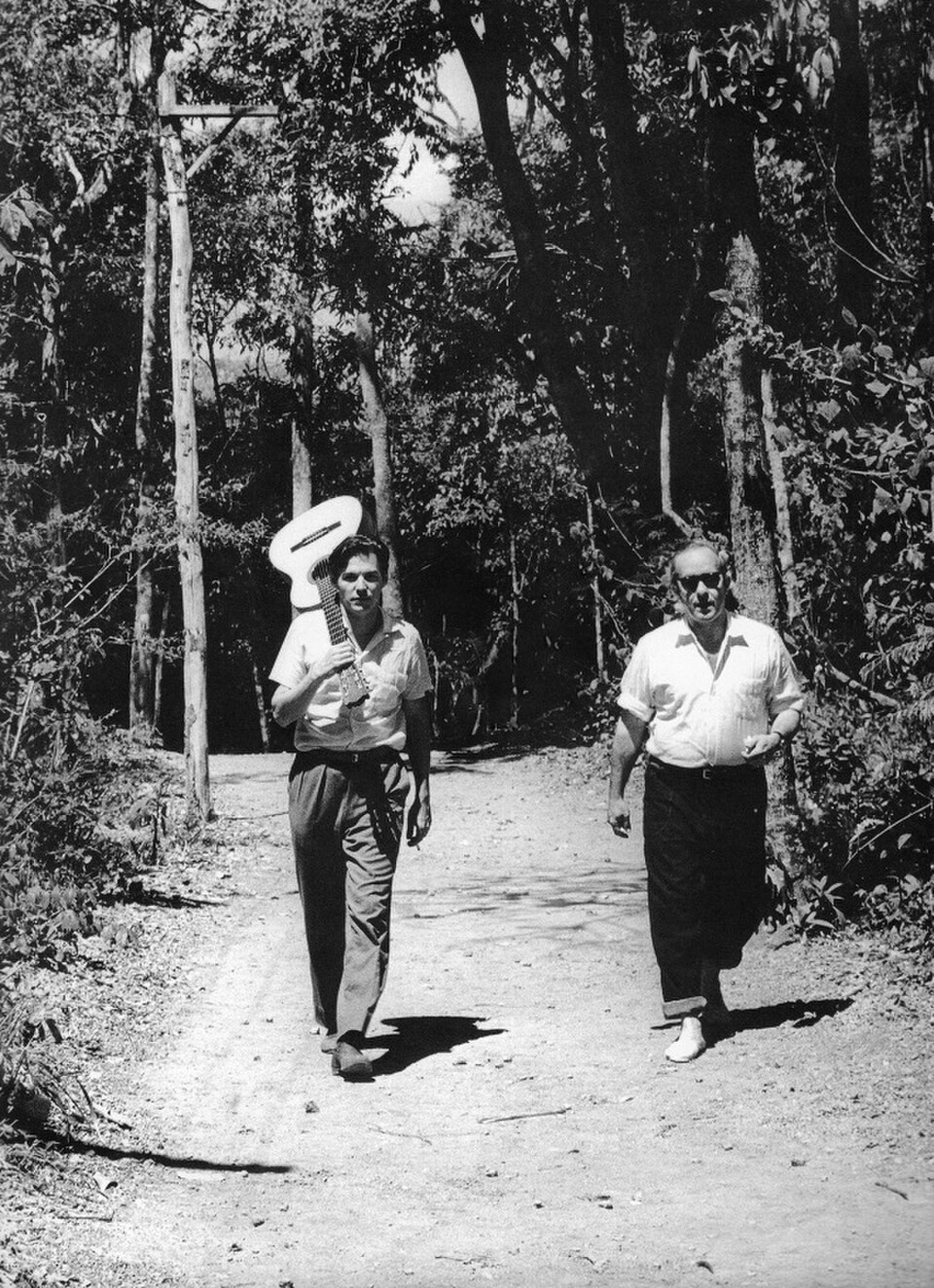
Tom Jobim and poet and lyricist Vinicius de Moraes, captured on a walk in January 1962. Source Wikimedia Commons
Elias was 17 and on a tour with guitarist and singer Toquinho (Antonio Pecci Filho) and poet, lyricist and essayist Vinicius de Moraes (1913-1980), a friend and close collaborator of Jobim, best known as the co-writer of the original Portuguese version of “Garota de Ipanema” (The Girl from Ipanema), when she met Jobim.
“He would sometimes be with us on our shows,” recalled Elias. “This tour lasted three years, and we would stay for a full month in Rio de Janeiro, or in Argentina so that Jobim would come around and sometimes he would join us, or he would come around to Vinicius’ villa where we would get together when we were in Rio. So, I got to spend time with him, and that friendship continued throughout the years. It was a beautiful, long relationship.”
“The whole experience was very special, musically, personally, in every way,” she says. “Vinicius was one of the greatest, if not the greatest, lyricists and poets that Brazil ever had. Being around him, Toquinho and Tom was something very, very special. I learned and lived this music right from the creators of this music.” What we’ll hear, she notes matter-of-factly, “couldn’t be more authentic.”
An edited version of this story was first posted on https://www.artburstmiami.com/

