• Home
  • About
  • Contact

Jazz With an Accent

~ Global music in the 21st century

Jazz With an Accent

Tag Archives: music

Chucho Valdés’ Birthday Gift

05 Monday Oct 2026

Posted by Fernando González in Home, Jazz, Latin Jazz

≈ Leave a comment

Tags

Chucho Valdes, Jazz, music

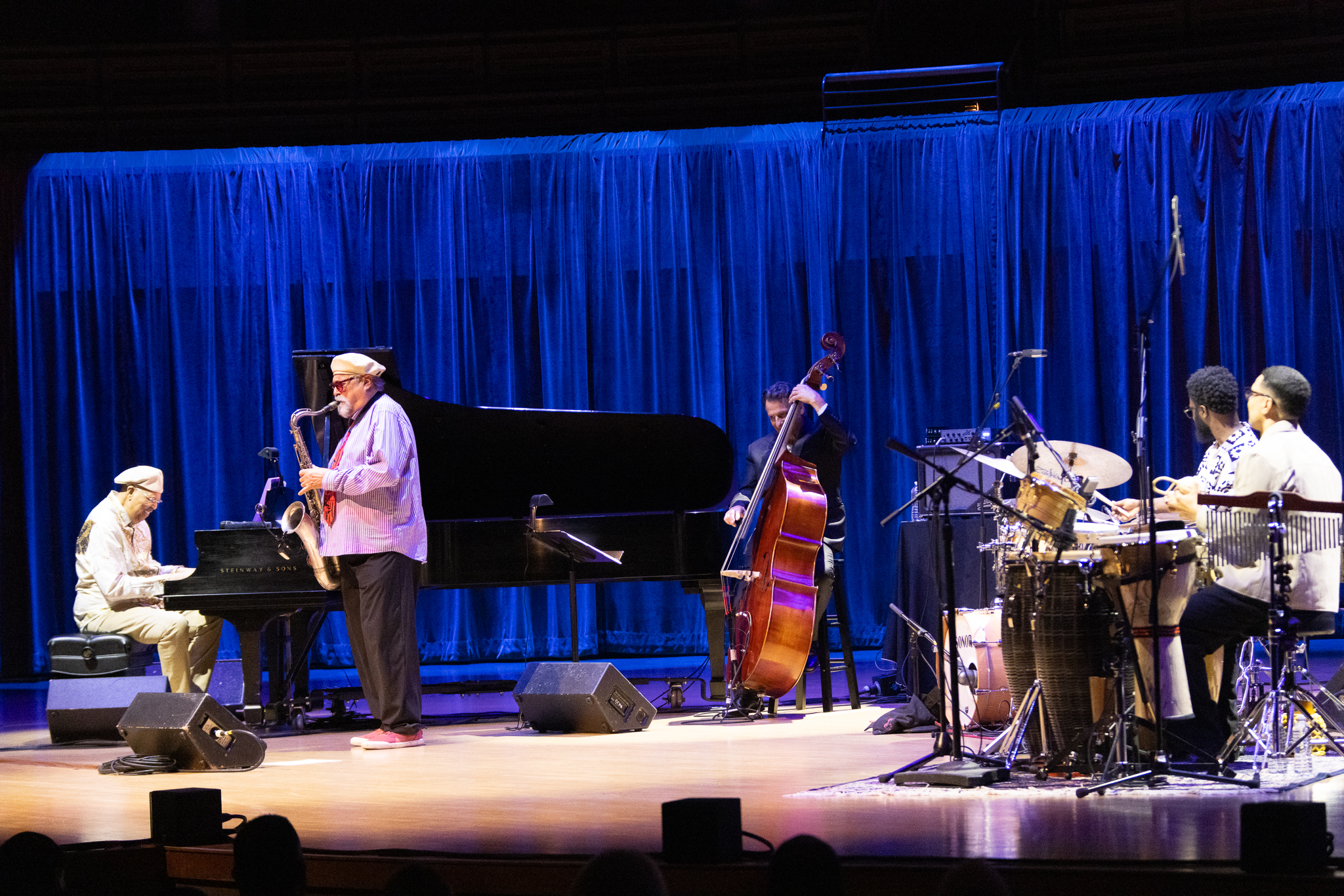
From left to right, Chucho Valdés, Joe Lovano, sax, John Patitucci,bass, Marcus Gilmore, drums and Roberto Jr. Vizcaino, percussion, at the Adrienne Arsht Center, Miami, Saturday. Photo by Taylor Brown, courtesy of the Adrienne Arsht Center.

Leading a superb hand-picked quintet, Cuban pianist Jesús “Chucho” Valdés celebrated his upcoming 85th birthday with a concert at the Arsht Center in Miami on Saturday that took him back to the beginnings of his career. It played out as a love letter to standards – the basic texts in the liturgy of jazz – and the art of improvisation.

In his brief introduction, casually sitting at the piano by himself, Valdés set the evening’s tone: intimate, inviting, and no-nonsense. These were some of the pieces he learned as a teenager, and he would play them with a group of musicians he admired and who had influenced him. But before that, “we’ll start from the end,” he announced as he introduced a new piece from a solo piano recording he had just completed. It wasn’t what anyone might have expected. It was brief but intense. There was no nostalgia. Instead, there were explosions of high energy, lengthy, lightning-fast runs; splashes of vivid harmonies set by unexpected turns and mood changes; until the storm died out in a whispered ending. It suggested a note of where Valdés might be today — but that would be for another evening.

Saturday, Valdés, alongside Joe Lovano on tenor sax, Marcus Gilmore on drums, John Patitucci on bass, and Roberto Jr. Vizcaíno on percussion, set out to mine, one more time, tried-and-true classics such as “Blue Monk,” “Body and Soul,” and “Green Dolphin Street,” and in the process, turned the Arsht Center into an intimate jazz club.

It was a remarkable performance, both as a group and individually. At its best, improvisation is instant composition; it’s writing a piece within a piece, in the air, on the spot. And yes, it’s also a place for musicians to stretch out and showcase their technical prowess – always a risky proposition with lesser players. Saturday, no matter how far Patitucci took his melodic variations, how Lovano chose to suggest a vocalist through his phrasing and inflection, or how many rhythms and tonal colors Gilmore and Vizcaíno layered on their drums, the shared idea was consistently serving the music at hand. Given that narcissism seems to be the default approach these days, from sports to high politics, this was a gift worthy of the occasion.

As for the birthday man, while the concert celebrated Valdés the player, not the composer, the program smartly included his “Mambo Influenciado.” It’s a statement piece in his long career and a Latin Jazz standard in its own right and it got a many-sided probing by the group. Another highlight was the one piece in the program that was not a jazz standard: Gabriel Fauré’s “Pavane in F♯ minor.” The reading by the Valdés – Patitucci duet was both elegant and subtly forceful, with a distinct jazz accent. “It will be Fauré as played by Bill Evans,” Valdés had suggested, tongue-in-cheek, in our conversation the week before the concert. By the end of their performance, Evans, Valdés’s jazz piano hero, was no doubt hovering around the house, listening in.

Happy birthday, Mr. Valdés. Same place, next year?

Share this:

  • Share on Facebook (Opens in new window) Facebook
  • Share on X (Opens in new window) X
  • Email a link to a friend (Opens in new window) Email
  • Share on LinkedIn (Opens in new window) LinkedIn
Like Loading...

With Historia Gipsy Kings look back – and forward

10 Monday Aug 2026

Posted by Fernando González in Home, On Music

≈ Leave a comment

Tags

flamenco, guitar, music

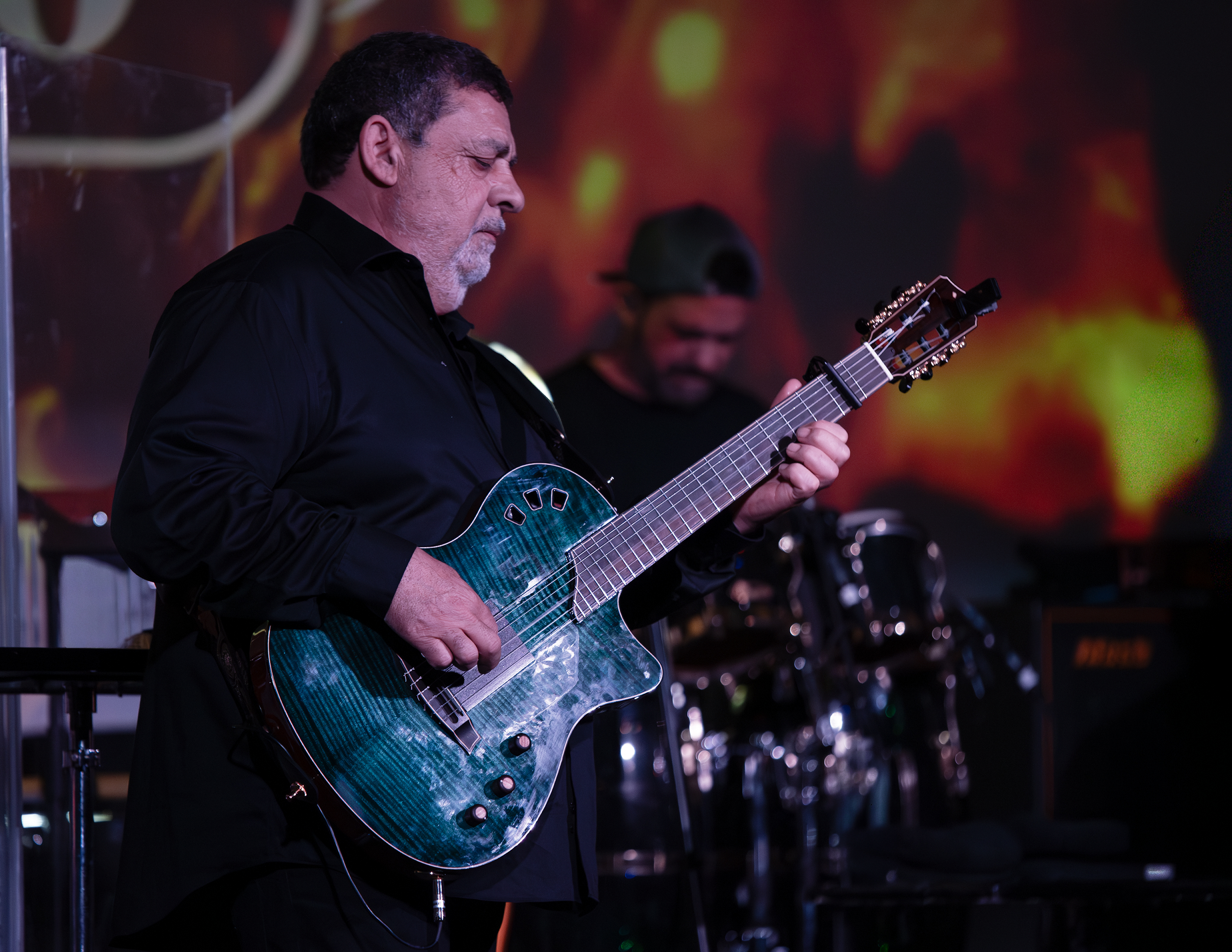
Historia, the latest release by the Gipsy Kings featuring Tonino Baliardo, celebrates family and community with a familiar and successful sound.

The title of the Gipsy Kings’ most recent release, Historia (History), may suggest a retrospective, but the music, mixing the familiar with subtle innovations, sounds like a reaffirmation and a look forward. And why not? They have a distinct sound, built on a joyful, high-energy mix of Catalan rumba, flamenco, and pop, highlighted with brushstrokes of styles from around the world, and simple, direct lyrics sung mostly in Spanish, but also French, Catalan, and languages of southern France. The combination turned a group of Gypsy Romanis once seemingly destined to scratch a living performing in restaurants, street events or busking in the beaches of Saint Tropez, into a global phenomenon.

But success was never a given. Their first two albums were largely unnoticed.

But then, their third recording, released in 1987, included the monster hits “Djobi Djoba” and “Bamboleo,” and the Gipsy Kings were on their way. Since then, they have won a Grammy (in 2014 for Best Global Music Album), have been featured in the soundtracks of Hollywood feature films including Toy Story 3 and The Big Lebowski, sold more than 25 million albums, have had in excess of 2 billion streams, and played to full houses all over the world.

“No, I never imagined that kind of success,” said Gipsy Kings leader, founder and main composer Tonino Baliardo, speaking in French through a translator from his home in the South of France. “We thought we could make a little living. We were doing private parties, and we did a little bit of work in Saint Tropez, but very little. When it exploded onto the world scene, it was just quite remarkable.”

They will be appearing at the James L. Knight Center in Miami on Saturday, August 15, at 8 p.m.

Tonino Baliardo, Gipsy Kings’ leader, founder, and main composer, once thought of making “a little living” playing community events, private parties near his home in the South of France. Becoming a global phenomenon? “No, I never imagined that kind of success,” Photo by Tobin Hill, courtesy of Gipsy Kings

The group was founded in 1979 in Arles, France, and featured two sets of brothers, the Baliardos (Tonino, Paco, and Diego, nephews of the great flamenco guitarist Ricardo Baliardo, better known as Manitas de Plata) and the Reyes (Nicolas, Canut, Paul, Patchai, and Andre, sons of Manitas’ cousin, flamenco singer José Reyes). Manitas de Plata and Reyes performed as a duo in the 1970s. It’s a story that speaks of a close-knit community, strong family ties, a fierce attachment to their traditions and legacies that must be honored.

Tonino Baliardo once called Manitas de Plata “the original Gipsy King.”

Over the years, the group has featured several personnel changes, while remaining a family affair. This iteration of the Gipsy Kings features Tonino’s sons, Cosso and Mikael.

Gipsy Kings featuring Tonino Baliardo, center, with his sons Mikael Baliardo (first from left) and Benji “Cosso” Baliardo (second from left) The group was founded in 1979 in Arles, France, and since it  has had different lineups. Mikael and Cosso Bailardo have been part of the group since 2014. Photo courtesy of Gipsy Kings featuring Tonino Baliardo

Musically, “with ‘Historia’ I wanted to make a new album preserving our sound, our gypsy feel, but with new melodies, new energy,” said Baliardo. “I love having my sons play with me. They grew up with this music, so they’re rooted in the culture. But they bring a young energy, a young spirit. And I also learn with them because music has evolved so much the past 35, 40 years.”

As to how they call their music and the blurry line in it between rumba Catalana, a style that emerged in Barcelona in the 1950s, and rumba flamenca, one of the palos or classic styles in flamenco, Baliardo sounds unconcerned. “At the end of the day, we are originally from Catalonia,” says Baliardo with a shrug.  “My parents were born in Barcelona, Catalonia. So, we call it rumba Catalana (Catalan rumba).”

Over the years, the Gipsy Kings have added to it elements drawn from different sources, from Brazilian music and reggae to Algerian rai. “Historia” includes touches such as jazz piano solos, a hint of a montuno, and electric guitar rock solos.

“We kept the rhythms, the sound of the guitars. We call it the compas, and over that, our sound is always evolving,” explains Baliardo. “We always learn something in our world tours, new styles, new things.”

But the overall theme in the album, not surprisingly, remains family and community.

Songs such as “El Campo,” (the Countryside) a snapshot of life among the Romani, “Primavera” (Spring) which starts with the line “I remember the time I spent in this neighborhood where I was born, life was sweeter, more beautiful,” or ‘La Guerra” (The War) an anti-war lament that hints at the impact of war in so many Spanish Romanies’ family histories, including the Baliardos, who were once refugees from the Spanish Civil War. Even the instrumental “Cielo” (Heaven) is a deeply personal statement, a tribute to Tonino’s brother Paco, who passed away in April 2025.

“In Historia I wanted to tell the story of our ancestors, the story of our community,” says Baliardo, the main composer in the group. “It revolves a lot around that, about telling the long history of the Roma people, the Gypsies, and spreading that message throughout the world.”

His favorite song, however, is the title track “because [in it] we welcome the people who come to see us at the concerts and invite them to have a party with us,” says Baliardo. “We have seen people so happy, partying, dancing in our concerts – and people were crying too, because something in the music touched them. And it’s a public that has been following us for years. Now it’s their children who come to see us because they have listened to our music with their parents. So, the story continues.”

This story first appeared in ArtburstMiami.com 


Share this:

  • Share on Facebook (Opens in new window) Facebook
  • Share on X (Opens in new window) X
  • Email a link to a friend (Opens in new window) Email
  • Share on LinkedIn (Opens in new window) LinkedIn
Like Loading...

“¡Viva La Parranda!” Music, stories, wisdom, and soup from a small Venezuelan town

08 Tuesday Jul 2025

Posted by Fernando González in Home

≈ Leave a comment

Tags

music, news, writing

The eight-member Parranda El Clavo group on stage is a small representation of the actual parranda. “The parranda is the whole town,” says singer Betsayda Machado. “But I couldn’t bring the whole town onto the stage.” From left to right, top row, Nereida Machado, Oscar Ruiz, Betsayda Machado, and Blanca Castillo; seated, Adrian “Ote” Gómez, Youse Cardozo, Nelson Gómez, and Asterio Betancourt, performing on opening night. (Photo by Fernando Gonzalez)

“Paint your village and you will paint the whole world” is advice attributed to Nobel Prize winner Leo Tolstoy. Few theatrical experiences in recent memory make the point as vividly or successfully as the immersive music-driven production “¡Viva La Parranda!”

The musical, commissioned by Venezuelan-born theater director, writer, and producer Michel Hausmann, co-founder and artistic director of Miami New Drama, and produced by Miami New Drama, returns to the Colony Theatre in Miami Beach, featuring the original ensemble after a successful run in South Florida in 2019 opening Thursday, July 10 through Sunday, July 27. Barlovento has deep, centuries-old African roots, and the ensemble plays its music on ancestral instruments such as the mina (a large drum with roots in what is now Benin), the culo’e puya (small drums of Kongo origin), and the quitiplás (bamboo drums). It also includes moving personal stories told by the performers, all of whom are neighbors of El Clavo. They aren’t professional actors, but their grace and emotion come from authenticity.

Continue reading →

Share this:

  • Share on Facebook (Opens in new window) Facebook
  • Share on X (Opens in new window) X
  • Email a link to a friend (Opens in new window) Email
  • Share on LinkedIn (Opens in new window) LinkedIn
Like Loading...
← Older posts

Search

Categories

  • Home
  • In Other Words
  • On Music
    • Jazz
    • Latin Jazz

Recent Posts

  • Celebrating Antonio Carlos Jobim and the art of (deceptive) simplicity
  • Chucho Valdés’ Birthday Gift
  • Chucho Valdés´85th Birthday, Standards, and the Poetry in jazz

Archives

  • November 2026
  • October 2026
  • September 2026
  • August 2026
  • March 2026
  • July 2025
  • April 2025
  • January 2025
  • November 2024
  • October 2024
  • September 2024
  • August 2024
  • July 2024
  • June 2024
  • May 2024
  • March 2024
  • February 2024
  • June 2023
  • May 2023
  • April 2023
  • February 2023
  • December 2022
  • November 2022
  • September 2022
  • June 2022
  • April 2022
  • March 2022
  • January 2022
  • December 2021
  • November 2021
  • September 2021
  • August 2021
  • March 2021
  • February 2021
  • January 2021
  • July 2020
  • June 2020
  • May 2020
  • April 2020
  • March 2020
  • February 2020
  • January 2020
  • December 2019
  • November 2019
  • October 2019
  • September 2019
  • July 2019
  • June 2019
  • May 2019
  • April 2019
  • March 2019
  • February 2019
  • November 2018
  • October 2018
  • September 2018
  • August 2018
  • July 2018
  • June 2018
  • May 2018
  • April 2018
  • March 2018
  • February 2018
  • October 2017
  • June 2017
  • May 2017
  • April 2017
  • March 2017
  • February 2017
  • January 2017
  • October 2016
  • May 2016
  • April 2016
  • March 2016
  • February 2016
  • January 2016
  • November 2015
  • October 2015
  • September 2015
  • June 2015
  • May 2015
  • April 2015
  • January 2015
  • October 2014
  • September 2014
  • August 2014
  • July 2014
  • June 2012
  • May 2012
  • December 2011
  • September 2011
  • August 2011
  • May 2011
  • December 2009
  • September 2009
  • December 2007
  • January 2001
  • September 1995
  • December 1994
  • November 1987

RECENT TWEETS

Tweets by FergonzMIA

Categories

  • Home
  • In Other Words
  • On Music
    • Jazz
    • Latin Jazz

Archives

CONTACT INFO

P.O. Box 402702 Miami Beach FL 33140 - 0702 USA fernando@fgonow.com

Blog at WordPress.com.

  • Subscribe Subscribed
    Jazz With an Accent
    Join 30 other subscribers

    Have a WordPress.com account? Log in now.

  • Jazz With an Accent
    View site in Reader
    Manage subscriptionsSign upLog in
    Report this content
    Collapse this bar
Loading Comments...
%d